
Conference Catering San Diego: A Planner's Guide

Planning a conference in San Diego means more than arranging a meal between sessions. Your catering plan has to support registration, networking, speaker schedules, venue rules, and the energy of a multi-day program. This guide shows San Diego event planners how to create reliable conference catering, while connecting the food and service plan to the broader corporate catering in San Diego strategy.
Tell us your conference vision and request a personalized consultation for chef-led catering in San Diego.
Effective conference catering combines a timed meal plan, flexible seasonal menus, clear dietary communication, and professional staffing. In San Diego, a full-service caterer should also coordinate venue access, setup, service, and breakdown so meals never compete with the program.
What Makes Conference Catering San Diego Different from Other Corporate Events?
Conference catering has to serve a changing schedule and a varied audience, not one single meal occasion.
A conference may include early registration, keynote sessions, breakout rooms, sponsor networking, an evening reception, and several days of programming. Each moment calls for a different service rhythm. A leadership dinner in La Jolla can be composed and leisurely. A morning meal at the San Diego Convention Center may need to be easy to access, quick to clear, and positioned so attendees reach the first session on time.
That difference makes conference planning more operationally detailed than ordering lunch for an office. A planner needs to consider:
When attendees arrive, move between rooms, and need a meaningful pause.
Whether food should be plated, passed, displayed at stations, or available for self-service.
How menus will work for guests with allergies, religious requirements, cultural preferences, or different dietary patterns.
How a catering team will enter the venue, stage equipment, replenish food, and restore the space without disrupting the agenda.
The best plan still feels effortless to guests. They should see thoughtful food, clear service points, and a calm hospitality team rather than the logistics behind them.
How Should You Plan Conference Catering San Diego for a Multi-Day Program?
Start with the program, then build a meal cadence that gives attendees energy, choice, and enough time to move through the day.
Begin by mapping the full conference schedule. Mark registration, keynote blocks, breakouts, sponsor activities, transportation windows, and any evening events. Then decide where food supports the experience. A substantial breakfast may work before a morning keynote, while a lighter refreshment break can protect attention during a dense afternoon schedule. Lunch may be a networking opportunity, a fast transition, or a seated experience depending on the event objective.
For a multi-day conference, vary the format while keeping the service reliable. One day might feature a composed breakfast and a seasonal lunch station. Another could use a lighter morning spread, a family-style lunch, and a polished reception with passed bites. The menu should feel cohesive without repeating the same presentation every day.
Use a planning checklist that includes:
Guest count by meal, including speakers, vendors, staff, and invited guests.
Meal start and end times, service duration, and room reset windows.
Room locations, guest flow, elevators, loading access, storage, and power needs.
Final dietary counts and a system for identifying special meals discreetly.
Who owns decisions onsite when the agenda, headcount, or venue conditions change.
Sharing this information early allows a caterer to recommend a service model that fits the conference instead of forcing the schedule into a preset menu.
What Breakfast and Lunch Options Work Best for Conference Attendees?
Conference breakfasts should be convenient and sustaining, while lunches should balance speed, freshness, variety, and social connection.
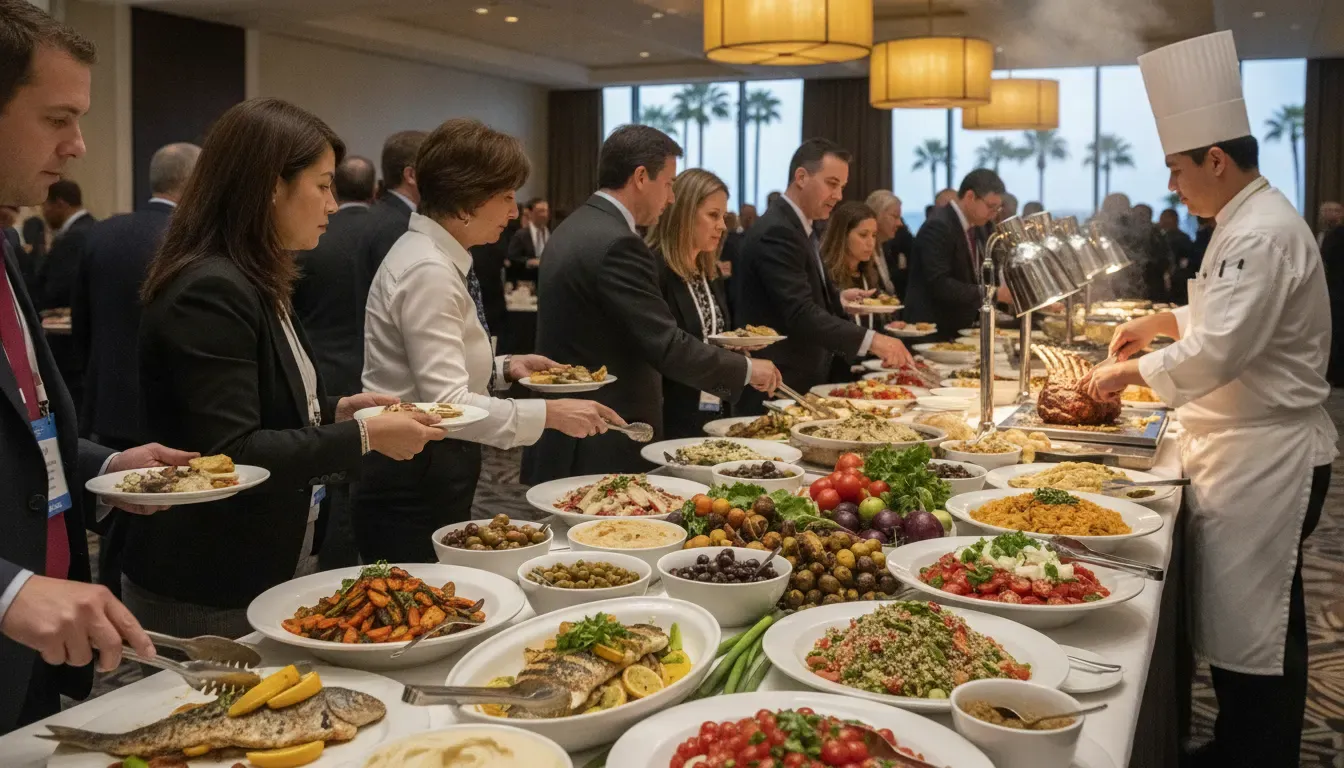
For early arrivals, consider a breakfast that can be enjoyed without a long queue. Seasonal fruit, California citrus, pastries, yogurt, coffee, and composed savory choices can give guests flexibility while they register or review the day's program. A more substantial plated breakfast may suit a smaller leadership retreat, but a large general session often benefits from well-spaced stations and clear service points.
Lunch needs more deliberate planning because it often carries the tightest transition window. A chef-led caterer can design a menu around seasonal vegetables, local avocados, grains, salads, seafood, and Mediterranean-inspired preparations that feel polished without weighing guests down. For a conference near Downtown San Diego or Balboa Park, the menu can reflect Southern California's produce and coastal character while remaining practical for the venue and the schedule.
Match the format to the room and the pace of the program:
- Staffed stations:
Best for large lunches and networking, with queue flow and replenishment planned.
- Plated service:
Best for smaller executive programs, with synchronized timing and room access coordinated in advance.
- Grazing displays:
Best for open networking periods, with presentation, labeling, and replenishment managed throughout service.
How Should Planners Build Breaks and Networking Moments Around Food?
Food breaks work best when they create an intentional pause without creating a bottleneck or pulling attendees too far from the program.
A refreshment break is not only a chance to set out coffee. It can help people exchange ideas, visit sponsors, and return to the next session feeling refreshed. Place service points where people naturally gather, but keep them away from registration lines, narrow corridors, and room entrances. If a venue has multiple breakout areas, duplicate essential beverages or smaller food displays so one station does not carry the entire crowd.
For networking, choose foods that are easy to enjoy while standing and speaking. Passed bites, small composed portions, and clearly arranged displays can create a more polished experience than oversized plates or complicated service. An evening reception in a San Diego setting may draw on bright citrus, seasonal seafood, California produce, and Mediterranean flavors, while a daytime break may need simpler portions that protect the event's timing.
Review the guest journey with the caterer and venue together. Confirm where food will be staged, how servers will circulate, how used serviceware will be removed, and how the team will reset the space before the next session. Those details are what turn a menu into dependable conference hospitality.
How to Handle Dietary Diversity at a Large Conference Event
Dietary planning should be collected early, translated into clear service instructions, and managed with the same care as the main menu.
Ask registration or event stakeholders to collect dietary information before the final count is due. Separate preferences from allergies and cultural or religious requirements, then share the details with the catering lead in a single organized document. The caterer should confirm which dishes meet each need, how special meals will be identified, and how the team will reduce cross-contact risk during preparation and service.
A flexible conference menu can offer variety without turning the room into a confusing collection of substitutions. Build naturally inclusive choices into the main spread, then provide separately prepared meals when a guest's needs require more control. Clear labels and trained servers help attendees ask questions without having to explain a personal requirement in front of a crowd.
Before service, confirm:
Which dietary requirements are confirmed and which are still pending.
Whether ingredient information and menu labels are ready for the venue.
Where special meals will be held and who will release them to the correct guest.
How the chef, event lead, venue, and service team will handle last-minute changes.
For culturally diverse conferences, thoughtful menu design matters as much as the labels. Chef Oren's Mediterranean and Middle Eastern expertise can help planners build a menu with a clear point of view while respecting the audience and event purpose.
What Venue and Load-In Details Should a San Diego Caterer Confirm?
Venue coordination protects the meal schedule, the guest experience, and the caterer's ability to deliver safely and professionally.
Ask the venue and caterer to review access details together before the event. A conference at the San Diego Convention Center, a hotel near Downtown, a corporate campus in Sorrento Mesa, or a private venue in La Jolla may each have different rules for deliveries, parking, freight elevators, prep space, refrigeration, waste, and serviceware. Do not assume that a venue's event room tells the whole operational story.
Document the details that affect execution:
Approved arrival time, loading dock instructions, and contact person for access.
Distance between the loading area, kitchen or staging space, and service rooms.
Available tables, power, ice, refrigeration, water, waste removal, and back-of-house facilities.
Required insurance documents, food safety procedures, venue fees, and cleanup expectations.
Room diagrams showing service points, buffet direction, guest flow, and staff positions.
When a planner is working in Del Mar, Rancho Santa Fe, Coronado, or another Southern California location, travel time and venue access should be part of the early conversation. The goal is not to add complexity. It is to remove surprises before guests arrive.
How Gather by Oren Manages Full-Service Catering for San Diego Conferences
Gather by Oren brings menu curation, professional staffing, setup, service, and breakdown together so the planner can stay focused on the conference.
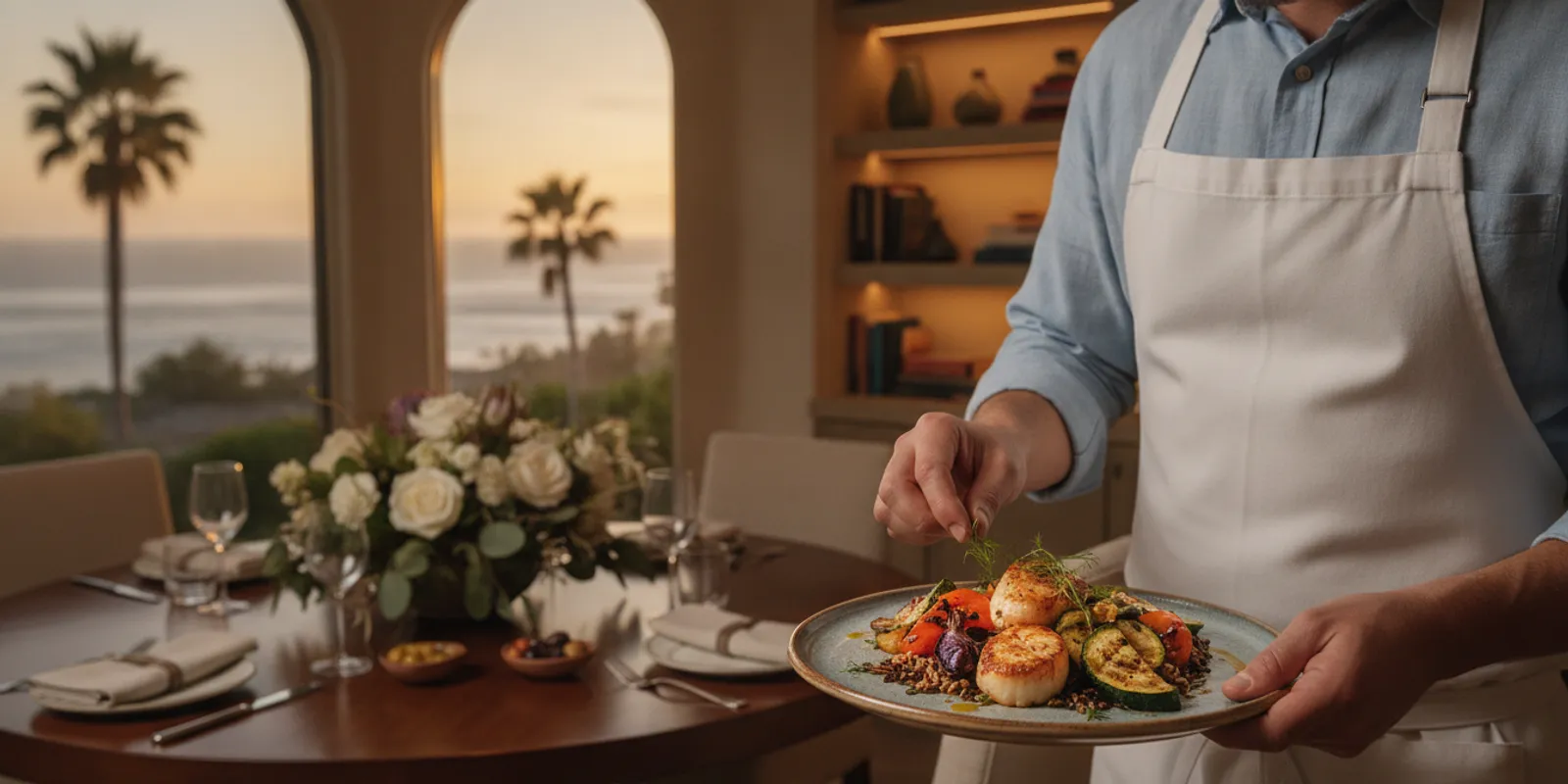
Gather by Oren's approach begins with the conference's purpose, audience, venue, season, and schedule. Chef Oren Koreh is directly involved in curating menus that can feel elevated and personal while still working at conference scale. That may mean a composed breakfast, a seasonal lunch station, passed bites for a reception, or a sequence of formats across several days.
The service model is designed around more than food delivery. The team coordinates the practical details that influence the guest experience, including setup, service timing, replenishment, staffing, and breakdown. Planners can also connect the conference brief to corporate event catering services and review how menu formats such as plated lunches, grazing tables, cocktail receptions, and all-day conferences can be customized.
For a leadership program, the conference plan may overlap with executive meeting catering, but the operational needs are different when hundreds of attendees move through multiple rooms. A strong proposal should explain how the menu, staffing, service points, and venue plan will change with the program.
Share your dates, venue, guest count, and conference schedule with Gather by Oren to begin a personalized catering plan.
FAQ: Conference Catering in San Diego
What should conference catering include?
Conference catering should include menu planning, meal and break timing, dietary coordination, venue logistics, professional staffing, setup, service, replenishment, and breakdown. The exact mix depends on the attendee count, schedule, venue, and service style.
How far in advance should I book conference catering in San Diego?
Start as early as possible, especially for a multi-day program or a preferred Downtown San Diego venue. Early planning gives the caterer time to review venue rules, shape the menu around the schedule, confirm staffing, and coordinate dietary information before final counts are due.
What food works well for a multi-day conference?
A varied sequence usually works better than repeating one meal format. Consider a convenient breakfast, quick but substantial lunch, refreshed breaks, and a more social reception menu, using seasonal California produce and service styles that match each part of the program.
Can a conference caterer accommodate dietary requirements?
Yes, a professional caterer can plan for many dietary needs when the information is shared early and clearly. Ask how the team collects requirements, prepares and labels special meals, communicates with servers, and manages cross-contact during service.
What should I ask a San Diego conference caterer?
Ask how the team handles multi-day schedules, venue access, staffing, meal transitions, dietary communication, replenishment, setup, service, breakdown, and last-minute changes. Request a proposal that explains the operational plan, not only the menu.
Request a personalized conference catering consultation with Gather by Oren and let Chef Oren Koreh help shape a seasonal, full-service San Diego event experience.

Comments