
What Is the Difference Between Drop-Off Catering and Full-Service Catering?

Drop-off catering delivers prepared food to your event, while full-service catering adds the people and event-day work needed to set up, serve, and clear the meal. For a San Diego company deciding between the two, the right choice depends on how much your team can manage and what experience you want guests to have. For an overview of corporate catering in San Diego, consider how the service plan fits the occasion as well as the menu.
In brief: Choose drop-off when your team has a suitable space and someone to receive, arrange, and manage the food. Choose full-service for a polished meeting, client reception, or company celebration where professional staffing, setup, service, and breakdown will help the event run smoothly. Gather by Oren can help plan customized corporate catering in San Diego around your schedule, venue, guest count, and menu needs.
What Is Drop-Off Catering vs. Full-Service Catering?
Drop-off catering focuses on delivery; full-service catering includes event execution as well as the food. The label alone does not tell you every detail, so confirm exactly what the caterer will bring, where responsibility changes hands, and who will manage the meal once it arrives.
With a drop-off order, prepared dishes are delivered to an agreed location. Depending on the provider and arrangement, food may arrive in serving containers, and the host or a designated employee handles the remaining steps. National Louis University's catering overview describes drop-off as a convenient option for meetings, events, and gatherings, with prepared selections delivered directly to the location. That can work well when the meal is straightforward and the host has time and space to coordinate it.
Full-service catering is broader. Gather by Oren describes its event model as food, service, venue coordination, and plating. The team plans the menu with the client and can coordinate professional staffing, setup, service, and breakdown. Gather works with venues; it does not own them. The event plan should establish how the venue and catering team will coordinate access, timing, and service.
Planning detail | Drop-off catering | Full-service catering |
Food | Prepared food is delivered for the host to manage. | Menu is coordinated with the event plan; food is served as agreed. |
Setup | The host should confirm who arranges serving dishes and the meal area. | The service plan can include professional setup and presentation. |
Guest service | Host or company staff usually oversee the meal after delivery; confirm this directly. | Staffing and service can be planned for the event format and guest count. |
Breakdown | Clarify who clears the food, containers, and service area. | Breakdown can be included in the agreed event scope. |
Best fit | A simple meal with a capable host and a suitable space. | An important event where the team wants a coordinated guest experience. |
Use this comparison as a starting point, not a substitute for a written scope. Ask what is included, what the client must provide, and what could change the service plan. For instance, a delivery might not include staff to replenish a serving area, while a staffed event still needs agreement about venue access and the schedule.
Confirm the delivery or arrival window and who will meet the team.
Ask whether serving pieces, linens, utensils, and cleanup are included or need to be arranged separately.
Write down who is responsible for food setup, guest assistance, and clearing the area.
For a broader view of the options Gather offers for workplace occasions, see Corporate Event Catering Packages. The useful question is not simply which service label sounds right. It is whether the responsibilities match your staff capacity and event priorities.
Which Model Is Better for a Corporate Event?
The better model is the one that protects your team’s time while giving guests the experience the event calls for. A brief internal lunch with a reliable host may need less coordination than a client-facing reception or a multi-part company celebration.
Start with the purpose. A working session may call for food that is easy to access without interrupting the agenda. A leadership gathering, product presentation, or milestone celebration may need a more deliberate flow: guests arrive, gather, eat, and return to the program without the organizers having to step away to manage the meal.
Then consider the people available to run the event. If an office manager is also greeting guests, handling presentations, and answering last-minute questions, assigning that person responsibility for arranging food can create avoidable pressure. Full-service staffing gives the event a defined service team. If the organization already has people assigned to setup and cleanup, delivery may be a practical fit, provided everyone understands their role.
San Diego venues also shape the decision. A meeting room in Downtown San Diego, an outdoor gathering in La Jolla, or a company event in Del Mar can each have different access, loading, and setup conditions. Confirm venue rules, delivery access, available tables, and the timing of room access before choosing the service model. If the event is at a partner venue, include its contact in planning conversations so details are not left until event day.
- Choose delivery when
the menu is simple to place, the schedule is flexible, and a named host can handle the meal.
- Consider full service when
guest-facing service, timing, presentation, or cleanup would otherwise fall on your event team.
- Ask for a tailored plan when
the event has dietary or cultural needs, a tight schedule, multiple program segments, or venue restrictions.
Gather’s menus are customized rather than selected from fixed packages. A conversation can account for the occasion, season, guest preferences, dietary requirements, and venue. For an executive meeting, that might mean planning a composed meal that fits a defined break; for a company reception, the service format may need to support guests arriving over a longer window. The final scope depends on the event details.
See Corporate Catering San Diego for Gather’s corporate service information, and review Seasonal Custom Menus when thinking through food choices. These pages are useful starting points for discussing the menu and event format together, rather than treating food and logistics as separate decisions.
What Does Full-Service Catering Actually Include on Event Day?
Full-service catering should have a clear event-day plan for arrival, setup, guest service, and breakdown. The exact scope varies with the venue and event, so the written proposal should make the handoffs and responsibilities easy to understand.
Before the event, the planning conversation should establish the menu, guest count, service style, venue requirements, timing, and any dietary or cultural considerations. Chef Oren is directly involved in menu curation. Seasonal ingredients and local sourcing inform the approach, and the menu can reflect the host’s vision rather than a standard package.
On the day, coordination often follows a practical sequence:
- Arrival and access:
Confirm when the catering team can enter, where to unload, and who can answer venue questions.
- Setup:
Establish the meal or service area and prepare it for the agreed format.
- Guest service:
Follow the event schedule, support the planned service style, and coordinate with the host or venue contact.
- Breakdown:
Clear the agreed service area and complete the responsibilities set out in the event scope.
Those steps matter in busy corporate schedules. At a Downtown San Diego meeting, for example, organizers may need to keep a room available for presentations and control the length of a meal break. At an outdoor gathering in Coronado or a coastal venue near Del Mar, the plan may need to account for access and the layout of the event space. These are planning examples, not fixed venue rules; confirm requirements with the venue itself.
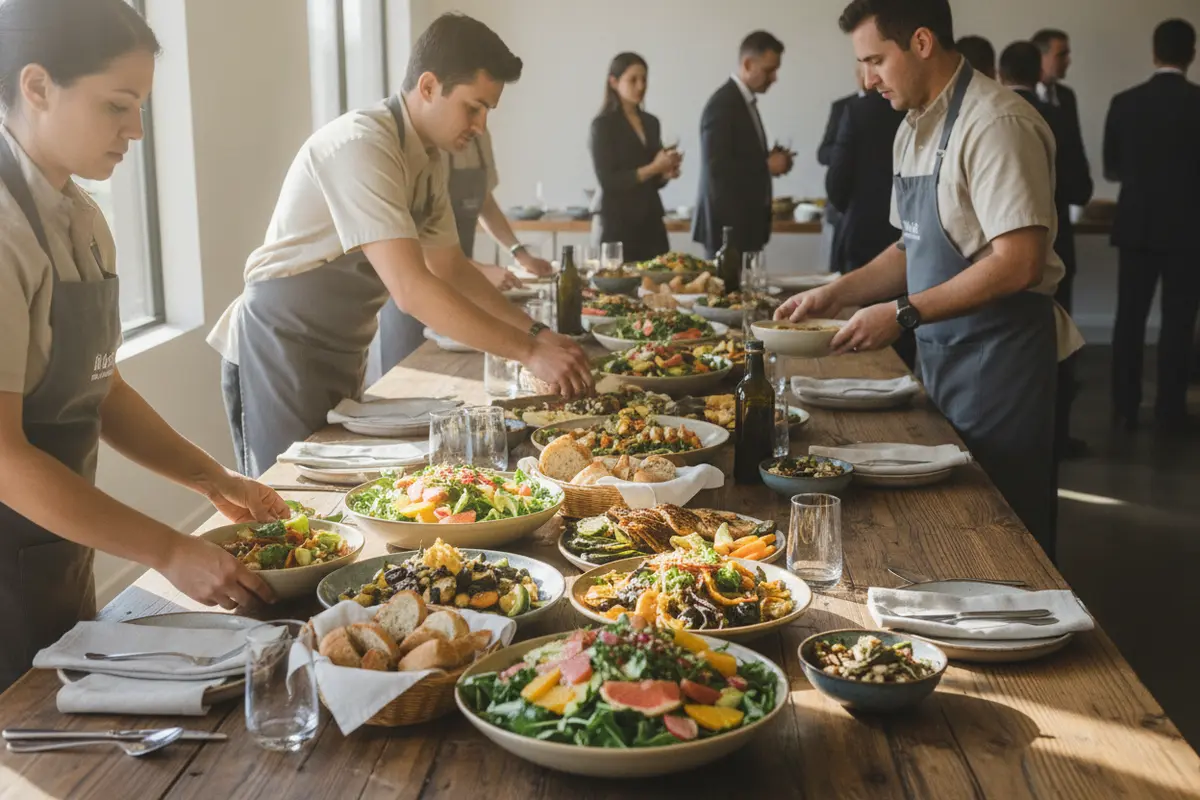
A menu can reinforce the setting without making service complicated. Depending on season and the client’s preferences, planning might consider California citrus, local avocados, or seasonal seafood. Chef Oren’s Mediterranean and Middle Eastern expertise can inform flavor direction, while the event format and guest needs guide how dishes are selected and served.
Share a realistic guest count and update it by the agreed planning deadline.
Provide the event timeline, venue contact, access instructions, and any restrictions.
Identify dietary needs and cultural requirements early enough to plan thoughtfully.
Clarify what is included in service, what the venue supplies, and who handles any remaining tasks.
Gather’s Services page outlines the broader service model. For wedding-specific celebrations, service needs can differ; the Wedding Catering Services page provides a separate place to explore that offering. For a corporate event, keep the scope focused on the business occasion, its guests, and its schedule.
When Does Drop-Off Catering Make Sense for a San Diego Company?
Drop-off catering can make sense when the meal is straightforward, the venue is ready, and a host can take over after delivery. It is most helpful to treat delivery as one part of event planning, with a person assigned to receive and organize the food.
For example, a small team meeting with a set start and finish may be manageable if the room has an appropriate place for the meal and the host can organize it before the break. A recurring office gathering may also suit this approach when the company already has a routine for receiving deliveries and clearing the room. These examples do not guarantee that a particular order will fit; discuss the menu, timing, and service details with the caterer.
Consider the practical checklist below before deciding:
- Space:
Is there a clean, accessible surface and enough room for guests to serve themselves or collect meals?
- Timing:
Can someone meet the delivery at the agreed time, even if the meeting schedule shifts?
- Ownership:
Who will arrange the meal, answer guest questions, monitor the area, and handle leftovers or containers?
- Guest experience:
Will guests be comfortable managing the service themselves, or does the occasion call for staff support?
- Venue approval:
Has the venue confirmed its rules for deliveries, setup, and clearing?
If you cannot confidently assign those responsibilities, compare the full-service option before deciding. A delivery can look simple in the proposal but still require meaningful attention from company staff. Add that time and responsibility to your comparison, alongside the menu and quoted service scope.
For a seasonal menu discussion, Gather’s Seasonal Custom Menus page is a useful reference. A company planning a larger celebration can also explore Corporate Event Catering Packages and ask how the event’s logistics will be handled. The goal is a service plan that fits, not a larger service level for its own sake.
How Can You Compare Catering Proposals Fairly?
Compare proposals by the responsibilities and deliverables they spell out, not by the service label alone. Two offers may use different terms, so ask the same questions of each and make sure you understand what your own team must do.
Use these questions to make the comparison concrete:
What food and menu choices are included, and how are guest count changes handled?
What time can the team or delivery arrive, and what access does the venue need to provide?
Who sets up the meal area, provides serving items, and helps guests during service?
Who clears the area, and what does breakdown include?
What dietary, cultural, venue, and schedule details are reflected in the plan?
Which tasks remain with the organizer, and who is the point of contact for event-day questions?
Write down the answers in a side-by-side checklist. One proposal might include staffing and breakdown; another might focus on preparing and delivering the food. These are different scopes, so comparing only the headline price would leave out the labor your company may need to provide. Ask for clear, personalized pricing based on the event details rather than assuming a public package or fixed rate applies.
It also helps to consider the event’s stakes. For an internal working lunch, an uncomplicated setup may be exactly right. For a client reception or company milestone, a more coordinated service plan may better support the impression and timing you want. In either case, a clear division of responsibilities helps prevent confusion as the date approaches.
To discuss your San Diego event, contact Gather by Oren with the date, venue, approximate guest count, schedule, and any menu or dietary considerations you already know. You can also review San Diego Caterer | Chef Oren Koreh to learn about Chef Oren’s background and approach.
Frequently Asked Questions
Is drop-off catering the same as full-service catering?
No. Drop-off generally means prepared food is delivered, while full-service can also include professional staffing, setup, guest service, and breakdown. Confirm the exact scope with the caterer because inclusions can vary.
Does full-service catering include venue rental?
Not necessarily. Gather by Oren coordinates with venues but does not own event venues. Ask whether venue costs or arrangements are separate, and confirm access and event requirements directly with the venue.
Can a corporate menu accommodate dietary or cultural needs?
Gather by Oren customizes menus around the client’s vision, occasion, tastes, dietary needs, cultural requirements, venue, and season. Share those needs during planning so the menu and service can be discussed together.
How should a company decide which service level to request?
Consider who will receive and set up the meal, support guests, and clear the space. If company staff have the time and a suitable venue, delivery may be workable; if those tasks would distract from the event, ask about full-service support.
What information should I have before requesting a quote?
Share the event date, location, estimated guest count, schedule, service preferences, and known dietary or cultural needs. If some details are still being decided, explain what is tentative so the proposal can reflect the current plan.
The best choice is the service plan that fits your company’s space, schedule, and staffing while giving guests the experience you intend. With clear responsibilities and a menu planned around the occasion, your team can make an informed decision between drop-off and full-service catering.



Comments