
How to Choose Corporate Caterer San Diego: Event Guide

For a corporate event manager, the right caterer does more than deliver food. They help protect the schedule, reflect your company's standards, and make the guest experience feel considered from the first arrival to the final departure. In San Diego, that means evaluating culinary quality alongside venue fit, staffing, service format, dietary communication, and the practical details that keep a meeting, launch, or conference moving.
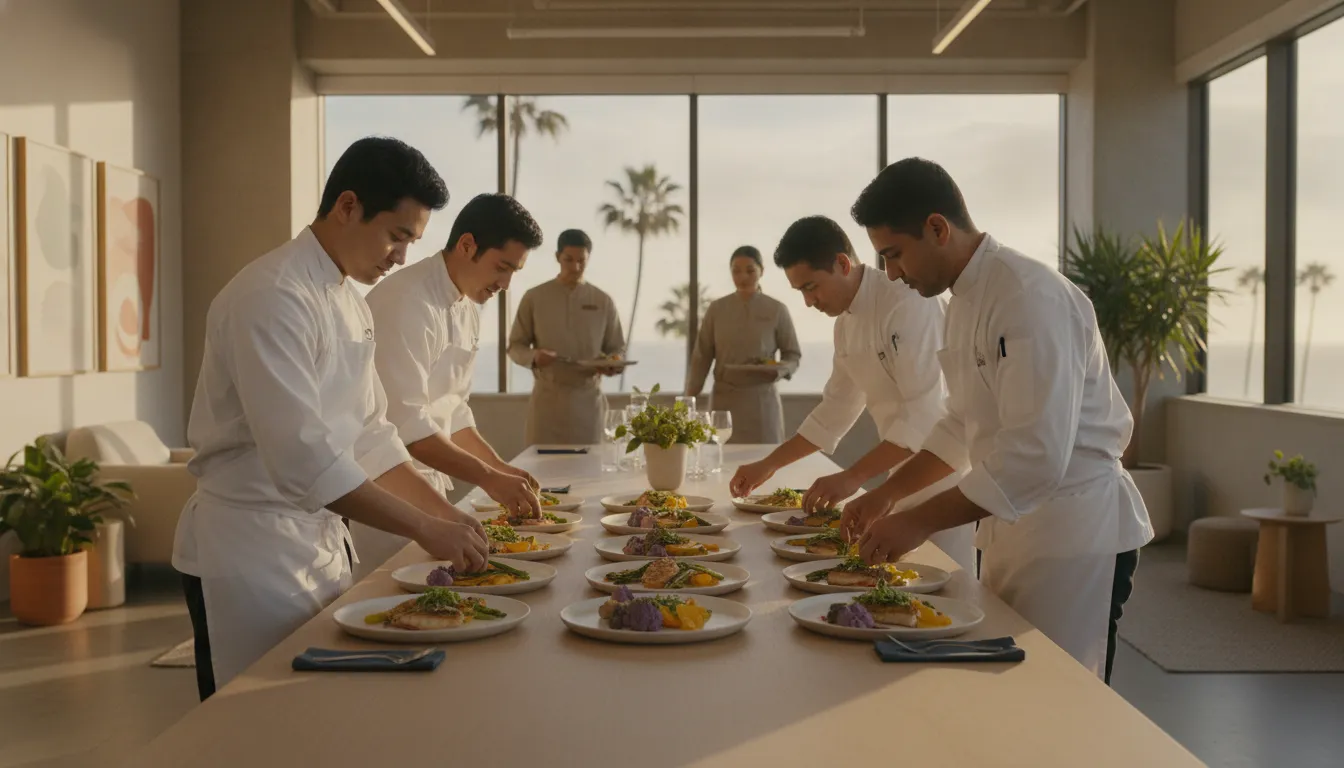
To understand how to choose corporate caterer san diego, compare each provider's ability to customize the menu. Coordinate with your venue, staff the event appropriately, and manage setup, service, and breakdown with clear accountability.
A chef-led, full-service team can bring those decisions together. Your event might be an executive gathering in La Jolla, a company celebration downtown, or an all-day program elsewhere in San Diego County. Start by matching the caterer's experience and service approach to the event you are actually planning, then review the proposal for the execution details behind the menu. These Corporate Catering in San Diego provides a useful reference point as you assess fit.
How to Choose a Corporate Caterer in San Diego for Your Event Type
The right caterer matches menu, service, staffing, and timing to your event purpose.
An executive meeting in a downtown San Diego boardroom has different priorities from a product launch in La Jolla. An all-day conference near the airport or a company celebration in Del Mar also needs a tailored plan. An event manager should evaluate how each proposal supports the guest experience and the operational demands behind it.
Match the service style to the business objective
For an executive meeting, discreet timing and polished presentation matter. A composed plated lunch or carefully timed delivery can protect the agenda and keep attention on the discussion. For a launch event, food can contribute to the first impression through interactive stations, passed appetizers, or a menu that reflects the company's identity. A conference may call for reliable transitions between breakfast, breaks, lunch, and afternoon service. While a celebration can allow more social formats such as grazing tables or a cocktail reception.
When comparing caterers, ask them to explain the reasoning behind the proposed format. A strong partner should connect the service plan to your schedule, venue, audience, and desired atmosphere rather than simply offer a standard menu.
For executive meetings, prioritize polished presentation, quiet service, accurate timing, and dietary communication.
For product launches, assess whether the menu supports mingling, brand experience, and efficient guest flow.
For conferences, confirm how the team will manage multiple service moments and changing attendance.
For company celebrations, consider whether the format encourages conversation while maintaining a refined experience.
Evaluate the event manager fit, not only the food
Event managers need a caterer who can translate a brief into an executable plan. That includes venue coordination, staffing scaled to the event, setup, service, and breakdown. It also means discussing practical details early, especially when an event moves between spaces in Coronado, Rancho Santa Fe, La Jolla, or another San Diego County location.
Gather by Oren supports corporate events ranging from executive meetings and launches to conferences and company celebrations, with menus shaped around the event, venue, season, and guest needs. For a closer look at the considerations that matter in a more formal business setting, review this guide to catering for executive meetings.
The best choice is the caterer that makes your event easier to manage while giving guests a thoughtful, well-executed experience. Look for clear communication, practical recommendations, and a service plan that feels specific to your event rather than copied from another proposal.
What Should a San Diego Company Look for in a Corporate Caterer?
The right corporate caterer combines a menu tailored to your event with dependable timing, clear dietary communication, an appropriate service format, and hands-on culinary leadership.
Start by asking whether the caterer is evaluating your event or simply presenting a standard menu. An executive meeting in La Jolla, a product launch downtown, and a company celebration in Rancho Santa Fe may all require very different pacing, presentation, and guest interaction. The proposal should reflect the setting, agenda, audience, and purpose of the event.
Look for thoughtful menu customization
Customization should go beyond choosing between a few predetermined entrees. A strong caterer will discuss the event theme, venue, season, guest profile, and the impression your company wants to create. For a summer reception, that might mean building around California produce and seasonal seafood. For a more structured luncheon, plated service may better support the agenda than a format that sends guests away from the meeting.
Chef Oren's direct involvement in menu curation is relevant because it keeps the culinary conversation connected to execution. Gather by Oren develops menus around the occasion, venue, seasonal availability, dietary needs, and cultural requirements, rather than treating those details as afterthoughts.
Ask how dietary needs are communicated
Dietary planning should be discussed before the menu is finalized. Ask how the caterer records allergies and preferences, separates relevant dishes, labels items, and communicates requirements to the service team. You do not need a complicated process, but you do need a clear one that reaches everyone responsible for preparation and service. When a guest has a serious allergy, share the requirement early and ask the caterer to explain its practical safeguards without promising that any environment is risk-free.
Confirm how dietary requests are collected before the final guest count.
Ask which service format makes ingredient communication clearest.
Clarify how the onsite lead briefs servers about guest needs.
Review whether the menu can accommodate cultural preferences as well as allergies.
Match service style to the event
A polished caterer should recommend service based on your schedule and guest experience. Options may include plated lunches, family-style service, grazing tables, cocktail receptions, passed appetizers, or interactive food stations. Full-service execution can also include staffing scaled to the event, venue coordination, setup, service, and breakdown. Ask who owns those details and how changes will be handled on event day.
Finally, look for evidence of brand awareness. Food at a launch or client-facing gathering should support the story your company is telling, not compete with it. Review Gather's catering for company launch events for a closer look at how menu and service decisions can shape a first impression.
How to Evaluate a Corporate Catering Proposal Before You Sign
A strong catering proposal makes scope, responsibilities, timing, and contingencies clear enough for an event manager to approve with confidence.
Read the proposal as an operating plan, not only a menu summary. It should show how the caterer will translate your event brief into a coordinated experience. Whether you are planning an executive meeting downtown, a product launch in La Jolla, or a company celebration in Coronado, Gather's corporate event catering options can be evaluated against the same practical standards.
Proposal area | What to confirm | Follow-up question |
Scope and format | Guest count, event purpose, meal periods, menu direction, service style, and dietary requirements are stated. | What is customized for this event, venue, and season? |
Staffing and leadership | Staff responsibilities, onsite leadership, service coverage, setup, and breakdown are identified. | Who is my primary contact onsite, and how is staffing scaled? |
Timeline and venue assumptions | Load-in, preparation, service, strike, access, equipment needs, and venue coordination are addressed. | Which venue details must be confirmed before the event? |
Inclusions and exclusions | The proposal distinguishes included coordination from items requiring separate confirmation, such as rentals or specialty suppliers. | What does the team need from our venue or internal staff? |
Changes and next steps | Decision deadlines, revision process, final guest-count timing, and approval steps are easy to find. | How will changes be documented and communicated? |
Pay particular attention to vague language around "full service." A complete event plan should clarify menu design. Professional staffing, setup, service, breakdown, and venue coordination rather than leaving those responsibilities implied. It should also acknowledge the practical realities of San Diego venues, seasonal availability, and the event's schedule.
Before signing, ask the caterer to resolve every blank assumption in writing. A polished proposal does not need to predict every detail immediately, but it should make ownership visible. Who confirms access? Who manages the service timeline? Who communicates dietary requirements, and what happens when the plan changes? Clear next steps protect the guest experience and make internal approval easier.
What Questions Should You Ask About Staffing, Safety, and Logistics?
A reliable corporate caterer should explain who leads service, how staffing matches the event, how food is transported and protected, and what the venue must provide. Ask for this operational detail before approving a proposal, especially for a conference, executive meeting, or launch in San Diego.
Start by identifying the onsite lead. Who is your point person from load-in through breakdown? How many servers, culinary staff, and support team members are planned for the guest count and service format? A plated lunch at a downtown office, a cocktail reception in La Jolla, and an all-day conference each require different timing, movement, and staffing decisions. Confirm who coordinates with the venue, rental partners, building security, and your internal event team.
Who has final responsibility for service decisions onsite?
How will staff coverage change if the guest count or schedule changes?
What is included in setup, active service, clearing, and breakdown?
Who manages transport, temperature control, and communication during delivery?
Food-safety questions should be specific without turning a vendor conversation into a legal review. California describes a catering operation as a permanent food facility approved for offsite food service. And says it must operate from a permitted facility capable of supporting the proposed service and food types. The state also addresses written procedures for transport, contamination prevention, food types, offsite preparation, food maintenance, cleaning, refuse, and handwashing. Review the California Health and Safety Code and ask the caterer how its plan applies to your event.
Ask whether food is prepared at the permitted facility, what limited preparation may occur onsite, and how the team maintains safe service conditions. California also requires access to potable water at an offsite function, and identifies a person in charge who ensures basic food safety during offsite service. These questions help you understand the process without assuming that one permit or procedure answers every venue-specific issue.
Venue logistics deserve the same attention. San Diego County says a host facility should provide potable hot and cold water, a mop sink, power for portable refrigeration, and a commercial restroom. The County also notes that host facilities may be subject to plan review and annual inspection. Review its catering and host facility guidance, then confirm access, load-in routes, elevator reservations, prep space, waste handling, and the event's end-of-night requirements with the venue.
Finally, ask how dietary information is collected, recorded, communicated to staff, and identified during service. The FDA identifies nine major food allergens, including sesame, and notes that more than 160 other foods have been reported to cause allergic reactions. A responsible process distinguishes guest preferences from allergy precautions and avoids promising that a meal is risk-free. Share requirements early, request clear menu descriptions, and confirm how the onsite lead will handle questions.
How Does Chef-Led Catering Differ from Platform-Based Services?
Chef-led catering gives your team a direct culinary partner who can connect menu decisions with guest needs, venue realities, and the overall event experience.
For an event manager, the distinction is less about a label and more about accountability. With a chef-led caterer, the person shaping the food can remain closely involved as the brief develops. That creates a clearer path from your event goals to the menu, service format, staffing plan, and onsite execution. A platform-based model may help organize options, but it can place more distance between the decision-maker, the culinary team, and the people managing your event.
Direct communication matters when a corporate program changes. A leadership meeting may require a polished plated lunch, while a product launch may call for passed appetizers or interactive stations that support conversation. Chef Oren personally curates Gather by Oren menus, adapting them to the event style, venue, season, dietary requirements, and client preferences. Full-service execution can also include staffing scaled to the event, venue coordination, setup, service, and breakdown.
- Accountability:
You can discuss the culinary direction and practical service plan with a team that understands both.
- Customization:
Menu choices can reflect your company, guest profile, event timing, venue, and seasonal availability rather than a fixed template.
- Communication:
Questions about timing, dietary needs, rentals, and service flow have a defined path before event day.
- Execution:
The food plan is developed alongside staffing, setup, service, and breakdown requirements.
Consider a biotech reception in La Jolla. The venue may need a menu that works for a narrow arrival window, supports networking, accommodates dietary needs, and feels polished without interrupting demonstrations or conversations. A chef-led team can refine the format with the planner, then coordinate the practical details that make the service feel effortless. For more local context, review this guide to La Jolla corporate catering.
This model is still full-service event catering, not a personal-chef arrangement. The focus is on professionally managed corporate service for a group, with culinary leadership connected to the broader event plan. When comparing providers, ask who owns the menu decisions, who will lead communication, and who will be accountable onsite. Those answers can reveal more about fit than a generic service description.
Why Does Customization Matter More Than Price for Corporate Events?
Customization matters because it connects the menu, service style, and event experience to your brand, guests, venue, and schedule rather than treating food as a standalone commodity.
For a corporate event, the right question is not simply what a caterer serves. It is whether the culinary plan supports the purpose of the gathering. An executive meeting may call for polished, composed service that keeps conversation central. A company launch may need food that feels distinctive, photographs well, and reinforces a carefully developed first impression. An all-day conference requires a different rhythm, with reliable transitions between arrival refreshments, meals, breaks, and networking.
That level of fit begins with a real conversation about your organization. Chef Oren personally curates menus around the event format, venue, season, guest preferences, and dietary or cultural requirements. For a San Diego gathering, that can mean building a menu around California produce, local artisanal products, and seasonal seafood when those ingredients suit the occasion. The result is more intentional than selecting a fixed menu from a list.
Customization also helps a caterer align the food with your brand without making the event feel like an advertisement. A technology company hosting guests in La Jolla may want a clean, contemporary service flow that leaves room for demonstrations and conversation. A client celebration in Del Mar or Rancho Santa Fe may call for a more social format. Such as passed appetizers, interactive stations, or a carefully paced plated meal. The menu and service should make the event easier to experience, not compete with it.
- Guest needs:
Dietary preferences, cultural considerations, and accessibility should be discussed early enough to shape the menu responsibly.
- Service flow:
Staffing and timing should match the venue layout, agenda, guest count, and moments when attendees need to move or network.
- Brand alignment:
Ingredients, presentation, and hospitality should reflect the level of care your company wants guests to remember.
- Execution scope:
Setup, service, breakdown, and venue coordination should be considered alongside the food itself.
This is why an event manager should evaluate the complete experience rather than compare a headline figure in isolation. A thoughtful proposal clarifies how the caterer will translate your objectives into food, staffing, timing, and hospitality. For launch planning, review how catering for company launch events can support a polished first impression while keeping the guest experience coherent from arrival through closing remarks.
Frequently Asked Questions
What is a corporate caterer?
A corporate caterer plans and delivers food service for business events such as executive meetings, product launches, conferences, and company celebrations. Depending on the event, the scope may include menu design, staffing, venue coordination, setup, service, and breakdown, not simply delivery of prepared dishes.
What should I ask a corporate caterer before booking?
Ask who will lead the event onsite, how staffing will match the guest count and service style, what the timeline includes, and how dietary needs will be handled. Also confirm venue requirements, setup and breakdown responsibilities, communication procedures, and how changes to the event plan will be managed.
What are common red flags with catering companies?
Be cautious when a proposal is vague about staffing, timing, service responsibilities, dietary communication, or venue logistics. A caterer should be able to explain what is included, identify assumptions that require confirmation, and provide a clear point of contact for the event.
How can I match the menu to a corporate event?
Start with the schedule, venue, guest profile, and desired level of interaction. A plated lunch may suit an executive meeting, while stations, passed appetizers, or a grazing table may better support networking. The menu should also account for seasonality, dietary requirements, and the atmosphere your company wants guests to experience.
Ready to Plan Your San Diego Corporate Event?
A thoughtful catering conversation can help align the menu, service style, staffing, and event logistics with your team's goals. Tell Gather by Oren about your vision, venue, guest experience, and timing so the next steps can be shaped around your event.
Contact us through the consultation page to share your corporate event vision and get started.



Comments