
Catering for Remote and Hybrid Team Events in San Diego: What Has Changed

Remote and hybrid work has changed the shape of company gatherings. For San Diego planners, catering for remote and hybrid team events means making the in-person meal feel worthwhile while giving off-site colleagues a clear way to take part. The format should fit the purpose, attendance, schedule, and location—not force every team into the same plan. For a broader look at business gatherings, see Corporate Event Catering Packages.
In short, start with the people who will be together in person, then decide how remote colleagues can join the moment. Choose a format that works with the meeting agenda, confirm the venue’s setup and timing, and share food details early so everyone knows what to expect.
What Has Changed for Remote and Hybrid Team Events in San Diego?
Hybrid events need food plans that account for uneven attendance, mixed schedules, and the difference between joining a call and sharing a meal in person.
A company gathering may bring one group into a conference room while colleagues join from home or another office. In practice, that affects more than the headcount. Planners need to think about when the meal happens, whether people can step away from a screen, and what the remote attendees can actually participate in.
There is no single hybrid format. A quarterly meeting might have a short working lunch, while a team celebration may be built around conversation and a longer meal. A leadership session in Downtown San Diego may have a fixed agenda and limited room for a food break. A planning retreat in La Jolla or Coronado may leave more time for a shared meal. The right catering plan follows the event’s purpose.
Hybrid schedules also vary by company and role. The Virginia Department of Rail and Public Transportation’s hybrid work and telework guidance notes that schedules can reflect employer and employee preferences or job duties requiring an on-site presence. For an event planner, the takeaway is practical: do not assume a standard attendance pattern. Ask the organizer for the expected in-person count and how that estimate was made.
- Attendance may be less predictable.
Ask for a working estimate, an update deadline, and a plan for changes.
- Meeting time matters.
A meal should fit the agenda rather than interrupt a presentation or leave attendees rushing back to work.
- Remote participation needs intention.
If the meal is part of the program, decide how off-site teammates will be included rather than treating the video call as an afterthought.
- In-person time has a purpose.
Teams may value a gathering for conversation, collaboration, recognition, or shared planning—not only for a change of scenery.
Attendance estimates are easier to use when they include a range and a date for the next update. For example, an organizer might share the expected in-person count when requesting options, then confirm the final number after invitations close. The point is not to predict every change. It is to make clear which details are firm, which are still moving, and who will provide the next update.
It also helps to separate the event’s shared experience from its meeting technology. A caterer can plan food and service for the in-person gathering, while the company’s event lead should identify who manages the video call, remote invitations, and any discussion prompts. When each responsibility has an owner, the meal can fit into the program instead of competing with it.
This shift makes a clear event brief especially useful. Gather by Oren’s Corporate Catering San Diego | Chef Oren Koreh | Gather by Oren is a starting point for organizers comparing a work meeting, reception, or larger company gathering.
Which Catering Formats Suit Remote and Hybrid Team Events in San Diego?
Choose a format based on how long people will gather, whether they need to keep working, and how much interaction the event should encourage.
A menu style influences the pace and feel of an event. Plated service creates a defined dining moment. Family-style service puts shared dishes at the center of the table. Stations and grazing can support movement and conversation. A working lunch may call for a simpler service rhythm so attendees can eat without losing the meeting’s flow.
Format | Works well when | Planning points |
Plated meal | The gathering has a set start and end, with time for everyone to sit together. | Confirm service timing, seating, and any program remarks that affect when guests can eat. |
Family-style meal | Conversation and a shared-table feeling are important. | Discuss table size, serving space, and how dietary needs will be identified. |
Stations or grazing | Guests will move between conversation, activities, or meeting spaces. | Plan traffic flow, access to each station, and when food should be refreshed. |
Cocktail reception | The goal is connection in a shorter, more flexible window. | Coordinate passed bites, guest movement, and the event’s arrival and departure pattern. |
Working lunch | The meal sits within a structured meeting or presentation. | Keep the service window aligned with the agenda and make it easy for guests to return to the session. |
For a hybrid meeting, an in-person format does not automatically include remote participants. If the meal is central to the event, the organizer can consider a separate, coordinated meal plan for off-site colleagues. That may mean arranging delivery through the company’s own process or setting a shared meal time; confirm logistics and availability separately rather than assuming the caterer serves every remote address.
Use the agenda to decide how much structure the meal needs. A plated meal gives attendees a clear pause and works best when the schedule allows people to sit down together. Family-style service creates a shared-table experience but needs room for serving dishes and enough time for guests to pass them. Stations or grazing can make movement easier during a reception, though planners should check that the room layout will not create a bottleneck. A working lunch is often most comfortable when food service does not compete with the speaker or screen.
When the team is split between a conference room and home offices, the in-person meal can still have a shared moment. An organizer might open with a brief welcome that includes everyone on the call, schedule a short conversation prompt, or reserve a portion of the meeting for a live team discussion. These simple choices help food support the gathering’s purpose without implying that remote attendees are receiving the same in-person service.
For the in-person menu, a tailored plan can reflect the meeting length, time of day, guest preferences, and dietary requirements. A morning session might call for a different pace than a late-afternoon reception. Seasonal California produce, local avocados, citrus, and seafood can inform a menu when they suit the season and event vision. A chef-led consultation helps turn these preferences into a coherent menu rather than a list of unrelated dishes. View Seasonal Custom Menus for more about customized menu planning.
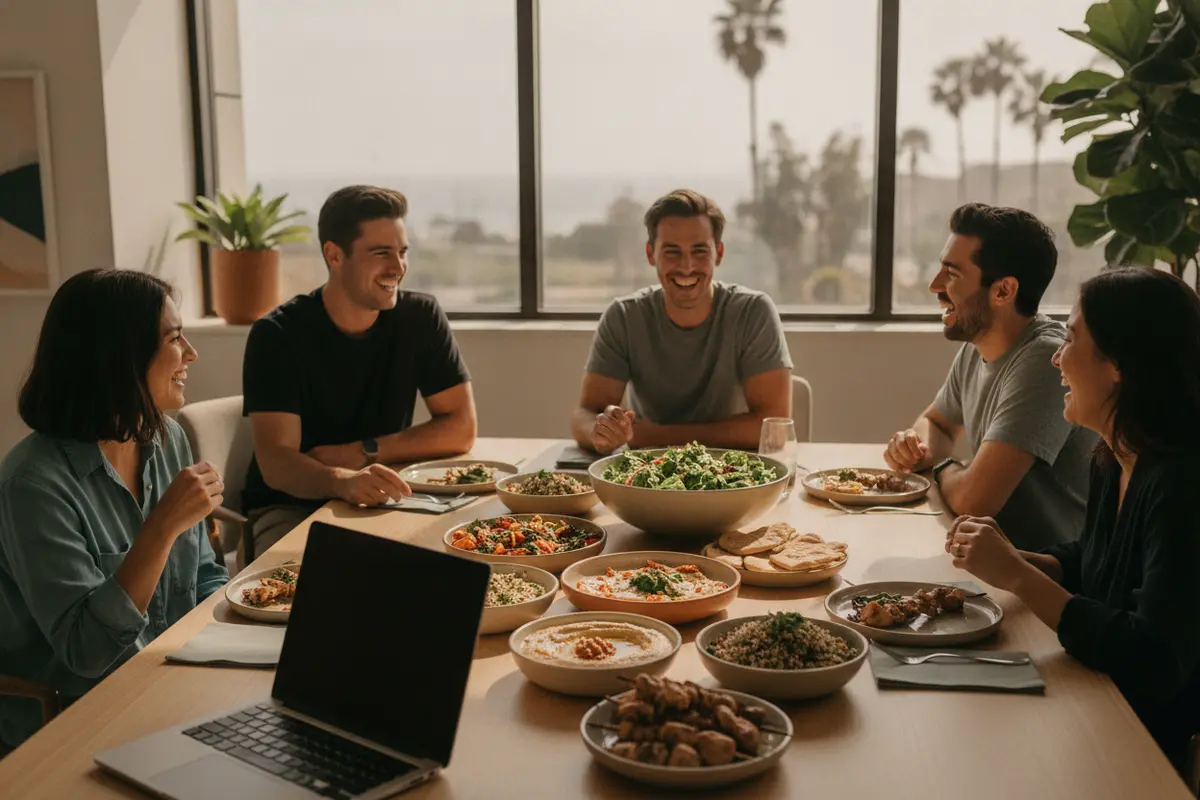
How Can In-Person Catering Help San Diego Teams Reconnect?
A thoughtfully planned meal gives colleagues a natural reason to pause, talk, and share an experience beyond the meeting agenda.
San Diego’s event settings can make an in-person gathering feel distinct without turning it into a complicated production. A company might host a team lunch near Downtown, plan a client reception in La Jolla, or bring a group together in a private event space in Del Mar, Rancho Santa Fe, or Coronado. The location should guide practical decisions such as arrival flow, service timing, and how much room the meal needs.
Food can also help express what the team is gathering to do. For a working session, service should support concentration and keep transitions straightforward. For a milestone or recognition event, the menu and style can feel more celebratory. For a team that has not met in person for some time, shared dishes or a reception format may help conversation begin naturally. These are planning choices, not a promise that a particular format will suit every group.
Consider the experience from arrival through departure:
- Make the first moments easy.
Decide whether guests arrive directly for a meal or check in before a meeting.
- Build in a real pause.
Give people enough time to eat and speak without compressing the meal between agenda items.
- Use the menu to reflect the occasion.
A menu can take direction from the company’s preferences, the season, and the kind of gathering.
- Keep remote colleagues visible.
If they are part of the program, include them in welcome remarks, discussion, or a planned shared moment.
San Diego event spaces vary in their rules, kitchen access, loading arrangements, and service areas. A venue partnership is coordination, not venue ownership; the event host still needs to confirm access and building requirements. A location such as the Abbey on Fifth, Grand Tradition, or Rancho Valencia may have its own operating details, so verify the specific venue’s policies directly before finalizing the event plan. Gather by Oren provides full-service catering coordination, including menu planning, professional staffing, setup, service, and breakdown, with details shaped around the event and venue.
What Should Planners Confirm Before Booking Hybrid Team Event Catering?
Clear answers about attendance, agenda, venue logistics, menu needs, and remote participation make it easier to build a plan that feels smooth on event day.
Before requesting a proposal, gather the information that affects scope. An early estimate is useful, but planners should also explain what might change and when a final count will be available. A shared planning document can keep the organizer, venue, and catering team aligned without forcing guests to navigate several separate updates.
Hybrid event plans benefit from one person owning the master schedule. That person can coordinate the food window with speakers, breaks, room access, and the remote meeting link. If the event includes a presentation, confirm when the screen or microphone will be in use and whether attendees can leave their seats to serve themselves. The catering plan should work alongside the run of show, not require last-minute changes to it.
For dietary requests, record what the guest has shared and ask the catering team how those requests can be handled within the planned menu and service style. Keep the details available to the people who need them, and tell guests where they can ask questions. Clear communication is more helpful than making assumptions about what a guest can or cannot eat.
- Define the event’s purpose.
Is it a working meeting, a welcome gathering, a celebration, or a mix? The answer helps set the meal’s pace and style.
- Describe the schedule.
Share arrival time, presentation blocks, breaks, and the preferred meal window. Flag whether service should happen before, during, or after a program segment.
- Estimate attendance and timing.
Separate the expected in-person count from remote attendance. Ask who will communicate changes and by what date.
- List dietary and cultural needs.
Gather accurate requests early and clarify how guests will identify their meals or ask questions at the event.
- Confirm venue logistics.
Ask about load-in, kitchen access, tables, power, service rules, cleanup, and any building restrictions. Do not assume every venue provides the same facilities.
- Choose how remote colleagues will participate.
Decide whether food is incidental to their involvement or whether the company wants a separate meal arrangement. Confirm who manages delivery and communication.
- Set decision points.
Identify who approves the menu, staffing plan, event details, and final guest count so questions have a clear path to an answer.
For occasions with a more personal or celebratory menu, browsing Chef Oren’s background can help organizers understand the culinary perspective behind the planning. The menu itself should be shaped by the client’s tastes and event requirements, not assumed from a sample alone.
A simple comparison can help the planning team decide how much coordination is needed:
- Short working lunch:
prioritize a dependable service window and a menu suited to a focused meeting.
- Half-day workshop:
consider a meal plus a planned break, and confirm the room can accommodate both.
- Team celebration:
allow more time for conversation and choose a style that supports the desired atmosphere.
- Multi-location hybrid event:
coordinate the in-person meal and remote participation as related but distinct logistics.
How Does Gather by Oren Adapt Catering for San Diego’s Hybrid Events?
Gather by Oren plans each event around its people, menu, venue, and service needs, with Chef Oren Koreh directly involved in menu curation.
Hybrid events do not require a standard menu or a one-size-fits-all service plan. Gather by Oren is a San Diego-based, chef-led full-service catering company serving San Diego County and Southern California. The planning process can account for the occasion, guest count, venue, dietary needs, schedule, and seasonal ingredients. Menus are customized rather than selected from fixed packages.
For the in-person portion, full-service catering can bring together menu design, professional staffing, setup, service, and breakdown. That matters when an organizer is already coordinating presenters, room access, technology, and guest communication. The event team can discuss how the service plan fits the venue and agenda; the host remains responsible for confirming venue access and requirements.
Local context belongs in the conversation, too. A reception near the coast may have different guest movement and timing from a seated lunch in a Downtown meeting room. A gathering in North County or Rancho Santa Fe may involve a longer arrival window or particular access instructions. Share the address, room layout if available, and venue contact early so the service plan can be discussed against the actual setting. These details help planners ask the right questions before event day rather than making assumptions based on the neighborhood alone.
Seasonality can shape the menu in a similarly practical way. Instead of specifying one ingredient before the date and menu are confirmed, tell the chef what flavors, regional influences, and level of formality matter to the team. Chef Oren’s direct involvement in menu curation allows the conversation to focus on the event’s preferences and the season. The result is a considered menu direction rather than a fixed template applied to every company gathering.
To make a first conversation useful, share the date or range, location, estimated number of in-person guests, event purpose, timing, and any known menu requirements. If remote colleagues will join, describe how they will participate and whether the company is handling any separate food arrangements. Gather can then discuss a personalized consultation and quote based on the event’s actual scope.
Explore Gather by Oren’s catering services or review corporate event catering details as you shape the plan. If your company event is also tied to a larger celebration, the wedding catering information shows how event menus can be tailored to a different occasion and service flow.
Frequently Asked Questions
Can a hybrid team event include a meal for remote colleagues?
It can, but remote food arrangements involve separate delivery locations and coordination. Decide whether the meal is essential to remote participation, then confirm who will arrange delivery, communicate timing, and handle any location-specific requirements.
What catering format works for a hybrid company meeting?
It depends on the schedule and purpose. A working lunch may need a concise service window, while a team celebration may benefit from a longer seated meal, family-style service, or a reception format. Match the format to the agenda and room.
How early should we share the in-person guest count?
Share the best current estimate when you begin planning, along with the date when you expect to confirm it. The appropriate final-count deadline depends on the event scope, menu, venue, and service plan, so confirm it during the consultation.
Can a San Diego catering menu account for dietary or cultural needs?
Yes. Share known requirements as early as possible and explain how guests will communicate any additional needs. A customized menu can be discussed around the event, guest preferences, and service setting.
A thoughtful hybrid event starts with a clear purpose and a meal plan that gives the in-person gathering room to feel personal while keeping remote colleagues included in the moments that matter.
Comments