
Choosing a Caterer in La Jolla: A San Diego Planning Guide

When comparing caterers La Jolla CA hosts can choose from, start with the experience you want guests to have, then confirm that the team can manage the menu, service, and venue logistics together. For a wedding, family celebration, or business gathering, the right fit is a caterer who listens, explains the plan clearly, and builds the event around your needs rather than a fixed menu.
Choose a caterer by comparing the proposed service, menu flexibility, staffing, venue plan, and what the written proposal includes. Share your date, guest count, schedule, and dietary needs early so you can judge whether the plan fits your La Jolla event.
How should you compare caterers La Jolla CA?
Compare the complete service, not just a sample menu: ask who plans the food, staffs the event, coordinates venue needs, and handles setup and breakdown.
La Jolla gatherings may take place in a private home, a coastal property, a garden setting, or a formal event space. Access, preparation conditions, and the pace of service can vary widely. Start with a practical outline of your event so each caterer can respond to the same information rather than offering a generic description.
Write down the occasion, guest count range, location, preferred schedule, and the feeling you want the event to have. A relaxed family-style dinner and a formal reception require different room plans and staffing. If you are planning in La Jolla but comparing providers from across San Diego County, ask how their team coordinates travel, arrival, and site-specific requirements.
Share the date, venue address, approximate guest count, and event schedule.
Describe whether guests will be seated, moving between spaces, or arriving in waves.
List allergies, dietary restrictions, cultural needs, and accessibility considerations.
Ask which staffing, setup, service, and breakdown duties are included.
Gather by Oren is a chef-led, full-service catering company based in San Diego and serving San Diego County and Southern California. Its catering approach brings together customized menu design, professional staffing, setup, service, and breakdown. Review Gather's catering services and compare the stated scope with your venue and desired guest experience.
Which service style suits your La Jolla gathering?
The right format depends on the event's pace, room layout, and how guests should interact around the meal.
A seated dinner can give the evening a clear rhythm and make speeches or formal moments easier to schedule. Family-style service places shared dishes at the table and can make a meal feel connected and generous. Passed appetizers suit a welcome reception or cocktail hour, while stations give guests a chance to move through a space and choose among options.
Consider the practical trade-offs before choosing. A plated meal depends on a dependable seating plan and coordinated service. Family-style dishes need sufficient table space and thoughtful portions. A station needs room for queues, replenishment, and guests to circulate. A combination can work too, such as passed bites during arrival followed by a seated meal.
Service style | Often works well for | Details to confirm |
Plated dinner | Formal receptions and milestone dinners | Table plan, meal timing, and synchronized service |
Family-style | Warm, shared gatherings | Table space, serving pieces, and dietary variations |
Passed appetizers | Welcome receptions and cocktail hours | Guest flow, duration, and replenishment |
Interactive stations | Social events with varied tastes | Queue space, access, power, and staffing |
There is no single format that suits every La Jolla event. A ceremony followed by a reception may need a different rhythm from an executive gathering or intimate family dinner. Explore seasonal custom menus as a starting point for discussing a format around the occasion, tastes, dietary needs, and season.
How can you plan a menu around La Jolla and the season?
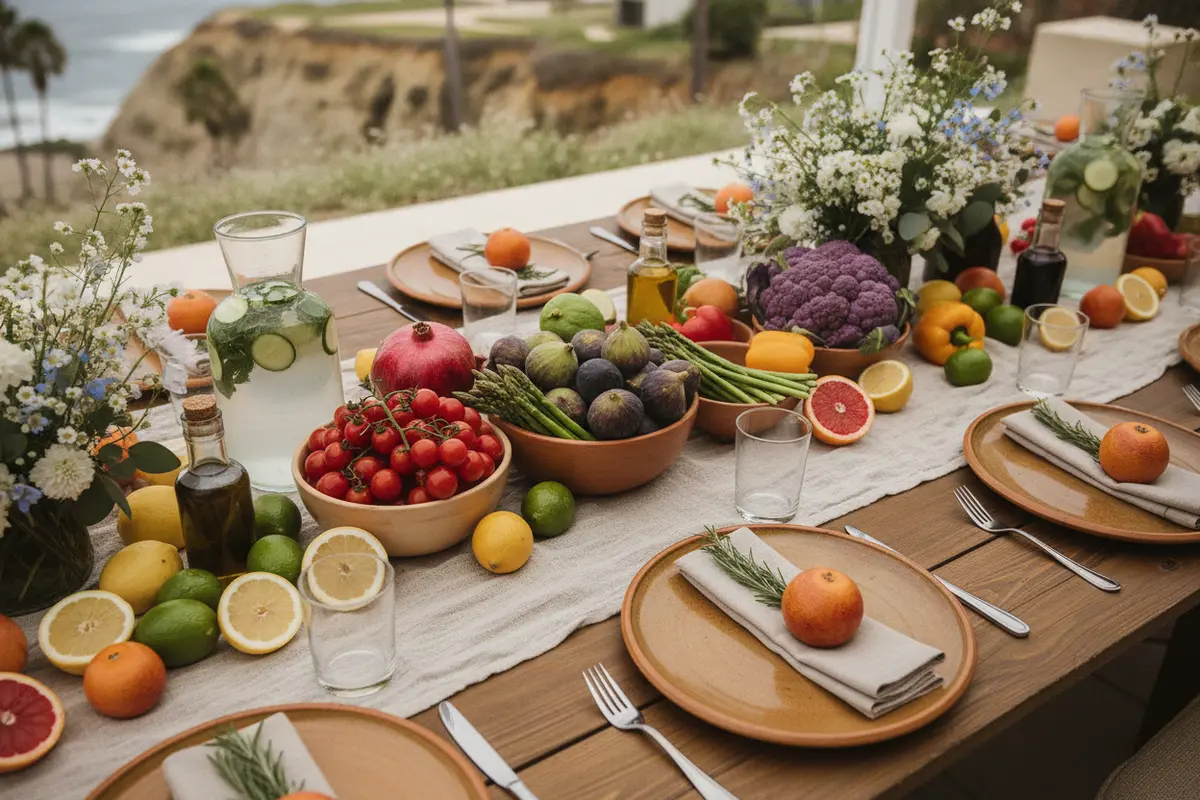
Build the menu around your guests and the time of year, then discuss which local ingredients and Mediterranean or Middle Eastern flavors suit the event.
Southern California's produce and coastal setting offer useful inspiration without requiring a theme. California citrus, local avocados, vegetables, and seasonal seafood can help shape a menu that feels connected to the region. Chef Oren Koreh is directly involved in menu curation and brings international culinary experience and Mediterranean and Middle Eastern expertise to the conversation.
Think about the meal as a sequence, not a list of favorite dishes. The arrival experience, appetizers, main course, and dessert should fit the schedule and the way guests will move through the event. For a late-afternoon celebration, you may want a lighter opening before a more substantial dinner. For a reception with guests arriving over time, ask how food can remain appealing and available throughout the service window.
Translate preferences into useful direction. Instead of saying only that you want something fresh and elegant, describe the flavors guests enjoy, the level of formality, and the role food should play in the gathering. You might ask for a bright citrus note in the opening course, a menu that feels generous for a family-style meal, or dishes that are easy to enjoy during a standing reception. These examples help the chef understand the experience you have in mind without dictating every detail.
Think through the guest list in practical groups. If some guests need vegetarian choices and others have allergies, ask how the menu will provide a satisfying meal for each group and how those plates will be identified. If the event includes children or older relatives, consider the pace and ease of eating as well as flavor. A menu should feel cohesive, but it should also be workable for the people attending and for the venue's preparation conditions.
Identify allergies and dietary restrictions, including how they affect specific guests.
Explain any family traditions, cultural requirements, or favorite flavors to include.
Decide whether you want one cohesive menu or several choices for guests.
Ask how seasonal availability and the venue's preparation conditions may affect selections.
Be specific about what matters most and what you would rather avoid. If several guests have restrictions, ask how the caterer will confirm those needs and communicate the final plan to the service team. For a menu with multiple courses, confirm how the timing works alongside speeches, entertainment, or other program elements. Read more about Gather's culinary approach before a planning discussion.
What venue and service details should you confirm?
Confirm access, kitchen facilities, timing, and site rules before finalizing the menu so the service plan fits the location.
La Jolla venues can have very different loading and preparation conditions. A home kitchen, a coastal property, and a formal event space will not offer the same work areas or access. A caterer needs an accurate picture of the setting before confirming how food will be prepared, staged, and served. Gather works with venue partners but does not own event venues, so hosts should confirm the location separately.
Ask your venue contact for written details about vendor access and restrictions. Then share those details with the caterer. Small logistical questions can affect the whole event: a distant loading entrance may change arrival timing, limited refrigeration may shape the service plan, and a narrow service area can affect guest flow.
Confirm vendor arrival windows, loading routes, parking, and any building access procedures.
Check kitchen access, refrigeration, power, water, and available work surfaces.
Ask about restrictions on flames, equipment, cleanup, and service areas.
Share the schedule for guest arrival, ceremony, speeches, meal, and departure.
Clarify who coordinates rentals and how other event vendors will communicate.
For weddings, review Gather's wedding catering services and discuss the venue-specific plan. For a company gathering, the corporate event catering page can help you consider how the service should fit the occasion. Keep one current schedule and share updates with the caterer and venue contact so everyone is working from the same plan.
What food-safety questions belong in your planning conversation?
Ask how food handling, temperature control, and allergy communication will be addressed as part of the event plan.
Food safety is part of reliable service, especially when food is prepared, transported, staged, and served across a long event. You do not need to design the caterer's procedures, but you can ask clear questions about how the team will manage the food from preparation through service. The U.S. Food and Drug Administration's food information provides public guidance on food safety and handling; discuss event-specific procedures directly with your catering team.
Share allergy information as early and clearly as possible, and ask how the final guest requirements will be confirmed. If a guest has a serious allergy, do not assume that a dish can be safely adapted without a direct conversation about ingredients and preparation. Confirm what the caterer can accommodate and how that information will be conveyed to the people serving the meal.
Also consider the event timeline. Ask how the service plan accommodates the interval between preparation and serving, any outdoor setting, and the sequence of courses. For a venue with limited facilities, clarify what the caterer needs on site and what alternatives are available. Good planning includes a clear contact person for questions and changes on the event day.
When guests will move between indoor and outdoor areas, walk through the intended route with the venue contact. Note where food will be staged, where guests will gather, and whether weather could change the room plan. A coastal afternoon may feel different from an indoor evening reception; make sure the service schedule reflects actual arrival, meal, and program times instead of a broad estimate.
Assign one person to send the catering team the final, consolidated dietary list and schedule. If updates come from several family members or vendors, details can conflict. A single current document can state the meal times, guest count assumptions, special meals, venue access instructions, and day-of contact. Confirm when the caterer needs that information and tell them promptly when a material detail changes.
For allergy conversations, distinguish a preference from an allergy and explain which guest is affected, without sharing more personal information than needed. Ask what the kitchen and service team can reliably accommodate, how separate meals will be identified, and how servers will know whom to ask if a guest has a question. Avoid promising guests that a meal is suitable until the catering team has confirmed the ingredients and handling plan.
How do you read a catering proposal?
A useful proposal makes the scope, responsibilities, and next steps understandable before you commit.
Ask for a written proposal based on your actual event details. Pricing is customized, so compare what each proposal includes rather than assuming similar menu descriptions mean the same service. A quote should help you understand what is covered, what depends on venue conditions, and how adjustments will be handled.
Check the menu, guest count assumptions, service style, and event timing.
Confirm staffing, setup, service, and breakdown responsibilities.
Ask whether rentals, beverages, or coordination items are included or separate.
Review payment timing, deposit terms, and the process for final guest counts.
Ask whom to contact if the schedule, venue, or requirements change.
Compare proposals line by line. One may include more staff or a broader service scope, while another may leave those responsibilities to the host. Record any unanswered questions and request clarification in writing. Do not make a decision based only on a headline figure without understanding the full plan and the work assigned to you or the venue.
A practical way to compare is to create a short side-by-side worksheet. Give each proposal a row for menu, service format, staffing, setup and cleanup, rentals, schedule, dietary accommodations, and items still awaiting confirmation. Mark each item as included, excluded, or unclear. That simple distinction makes gaps visible without assuming that a lower total covers the same work.
For example, imagine two proposals describe a seated dinner for the same guest estimate. One specifies the number of service staff, arrival time, table setup responsibilities, and how late changes are confirmed. The other describes the food but leaves staffing or room reset vague. The second proposal may still suit your needs, but you should identify who will cover those tasks and whether the venue expects you to arrange them. Resolve the differences before comparing totals.
Ask how the quoted plan changes if the guest count moves, the schedule shifts, or the venue restricts access. You do not need to predict every possibility; you do need to know which changes require a revised proposal and who approves them. Keep the written answers with the proposal so that the host, venue contact, and catering lead share the same expectations.
It is also useful to ask when the menu and final guest count must be confirmed. Find out how changes are handled and which decisions need your approval. This helps you understand the timeline and avoid relying on verbal assumptions as the event approaches.
Build your own planning calendar from those answers. Put venue confirmation, menu review, dietary updates, guest-count deadlines, and final schedule approval on one list, with an owner for each task. A family host may handle guest information while a planner coordinates access and rentals; what matters is that each responsibility has a name attached. Share the list with the catering contact rather than assuming everyone is tracking the same dates.
Before approving, read the proposal once as the host and once as the person responsible for event-day logistics. Can you tell when the team arrives, where setup happens, how service begins, and what is left for the venue or host? If any answer is uncertain, ask for a plain-language clarification. A clear proposal is useful not only for making a choice but also for preventing last-minute confusion.
What should you ask before selecting a caterer?
Ask questions that show how the caterer will turn your priorities into a practical plan for your guests and venue.
Use an initial conversation to establish whether the process feels collaborative and clear. The discussion should cover your vision as well as the realities of the room, schedule, menu, and service team. Keep notes so you can compare answers afterward.
How will you tailor the menu to our guests, occasion, and season?
Who will be involved in menu planning and event coordination?
How do you confirm dietary needs and cultural requirements?
What staffing and service responsibilities are part of the proposal?
What information do you need from our venue before confirming the plan?
When should we decide on the menu, guest count, and schedule?
How will you communicate changes in the final weeks and on the event day?
Gather's frequently asked questions can help you prepare. You can also use the event inquiry page to share initial details and begin a conversation. For the most useful response, include a date or date range, location, guest estimate, occasion, and any early menu or service preferences.
Frequently Asked Questions
How far ahead should I contact a La Jolla caterer?
Reach out once you have a date, venue, and approximate guest count. Early conversations leave more time to coordinate venue requirements and shape a customized menu, particularly for larger gatherings or dates when many events are being planned. If some details are not confirmed yet, say what is still tentative.
Can a caterer accommodate dietary and cultural needs?
Discuss these needs at the beginning of planning, including allergies and cultural requirements. A customized menu can be developed around the occasion, guests, and venue, but the specific dishes and handling plan should be confirmed directly with the caterer. Provide accurate information and update the team if guest needs change.
Does Gather by Oren provide event venues?
No. Gather works with venue partners but does not own event venues. Hosts should secure a location and share its facilities, access rules, and schedule so the catering plan can be tailored to the site.
How is catering pricing determined?
Costs depend on the event's requirements, scale, and venue factors. Gather provides consultation-based customized pricing rather than fixed public packages. Share your event details and ask for a proposal that explains the scope and responsibilities.
What details should I send when requesting a proposal?
Include your event date, location, approximate guest count, occasion, schedule, preferred service style, and any known dietary or cultural needs. Mention the venue's kitchen or access details if you have them. These specifics help the caterer respond to your actual plans rather than an assumed event.
With your venue, schedule, guest needs, and preferred service style in hand, you can have a focused conversation and choose a plan that makes your La Jolla gathering feel considered from the first course to the final farewell.


Comments