
Planning Breakfast Catering in La Jolla: A Host Guide

Planning breakfast catering in La Jolla, CA starts with three decisions: what the gathering should feel like, how guests will move through the meal, and what the venue can support. A menu shaped around the season, the schedule, and your guests can make a morning event feel considered rather than rushed.
In short: Choose a service style that fits your event timing and space, then work with your caterer to tailor the menu, staffing, and setup around those conditions. In La Jolla, confirm access, parking, service areas, and any venue requirements early so the morning runs smoothly.
What should you look for in catering La Jolla CA?
Look for a team that can shape the menu and service around your guest list, venue, and schedule—not simply offer a fixed morning menu.
La Jolla events can range from a small family gathering near the coast to a professional meeting in a conference space. The right plan depends on the purpose and pace of the occasion. A breakfast for colleagues may need a prompt start and easy access to coffee, while a family celebration may benefit from a slower meal with room to visit.
Gather by Oren is a San Diego chef-led, full-service catering company serving San Diego County and Southern California. Its approach includes custom menu design, professional staffing, setup, service, and breakdown. Chef Oren Koreh is directly involved in menu curation, and menus can reflect the occasion, guest preferences, dietary needs, venue, and season.
For a La Jolla breakfast, consider whether the caterer can help you address:
Guest count and event format, including whether people will sit together or mingle.
Arrival and meal timing, especially if the event has a program or meeting start.
Venue access, kitchen facilities, setup windows, and cleanup expectations.
Menu preferences, dietary needs, and how food will be presented and served.
Gather offers full-service catering services and creates a tailored plan through consultation rather than relying on one menu for every occasion. If you are comparing menu directions, review the custom catering menus and discuss which elements fit your event.
How do you choose a breakfast service style for a La Jolla event?
Match the service style to the room, the event schedule, and how much interaction you want guests to have with the meal.
A seated breakfast can suit a hosted celebration or a program with a defined start. A station or family-style arrangement may encourage conversation, while individually served items can help a working meeting stay on schedule. These are planning directions, not fixed packages; the best choice depends on your venue and guest experience.
Service approach | Works well when | Confirm in advance |
Plated breakfast | Guests have assigned seating and a shared start time | Service timing, table layout, and meal duration |
Family-style service | The gathering is relaxed and guests will share a table | Table space, serving dishes, and dietary accommodations |
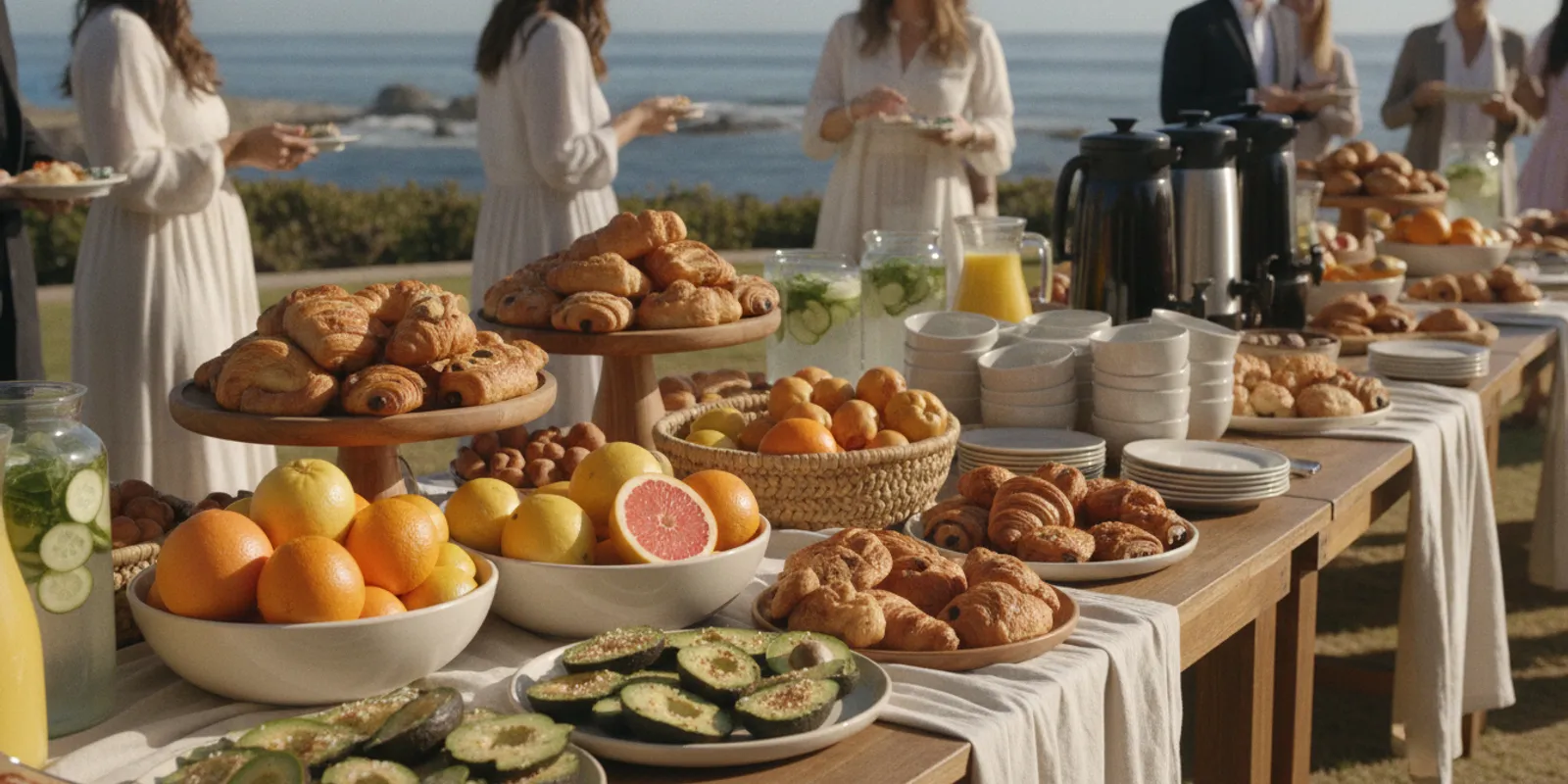
Stations or self-service | Guests arrive or eat over a flexible window | Room for circulation, replenishment, and clear food identification |
Passed or individually portioned items | Guests will mingle or the program has limited meal time | Staffing, pickup points, and when service begins |
For a La Jolla venue with a compact footprint, guest flow matters as much as the menu. Think through where people will enter, collect coffee, find their seats, and return to the program. At a coastal property or outdoor terrace, also ask about wind exposure, shade, power access, and the plan if weather changes.
See corporate catering packages and food stations for one example of a service format to discuss. The final setup should be tailored to your venue rather than assumed from a sample image or menu.
How can you build a seasonal menu for catering La Jolla CA?
Build the menu around the time of day, the people attending, and seasonal ingredients that feel natural in Southern California.
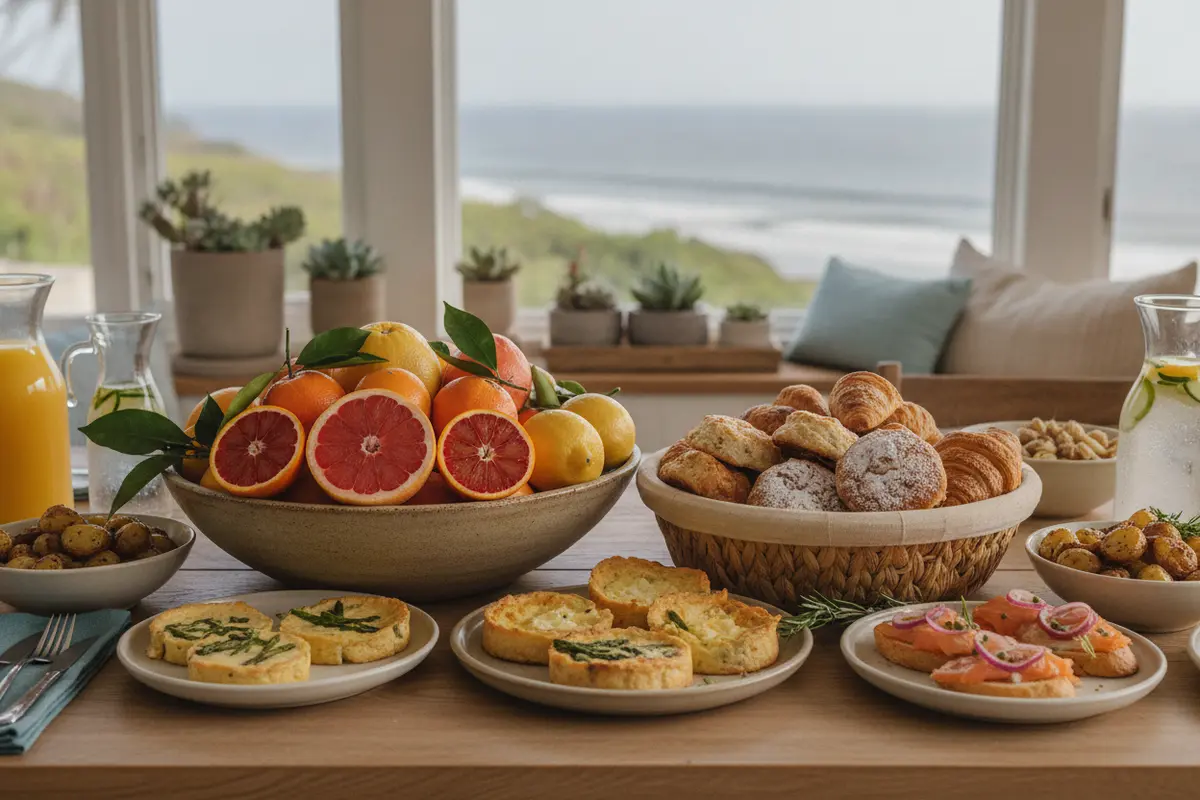
A morning menu can balance familiar choices with a few distinctive details. California citrus, local avocados, fresh fruit, and seasonal seafood can provide regional character when they suit the occasion and the season. Mediterranean and Middle Eastern influences can also bring bright flavors and an inviting sense of abundance without making the meal feel heavy.
When discussing options with your caterer, describe the experience you want rather than trying to specify every dish at the outset. Share whether you picture a light welcome breakfast, a substantial brunch, or a meal that carries guests through a long meeting. Chef Oren's direct involvement in menu curation helps shape a custom selection around those priorities.
A useful menu brief might include:
The occasion, start time, and expected meal duration.
Guest count, age range where relevant, and whether children will attend.
Dietary requirements, allergies, and cultural considerations to communicate clearly.
Preferred flavors, ingredients to include or avoid, and the desired level of formality.
Whether guests will be seated, circulating, or moving between activities.
Be specific about dietary needs when you inquire, and ask how they will be handled in the menu and at service. The venue may also have rules about outside food, preparation, equipment, or cleanup. A caterer can discuss how the plan fits the facility, but the host should confirm venue permissions directly as well.
What venue and timing details should you confirm?
Confirm the practical details with both the venue and caterer before the event date, especially access, facilities, setup time, and who handles each responsibility.
La Jolla venues have different layouts and operating rules. A private home, a hotel meeting room, and an outdoor coastal setting may each require a different setup plan. Do not assume that a venue provides kitchen access, tables, service items, or a long setup window. Put the answers in writing so the host, venue, and catering team are working from the same information.
Use this checklist when planning:
Confirm the approved arrival time, loading access, parking instructions, and route from vehicle to service area.
Ask what tables, chairs, linens, serving areas, and power sources the venue provides.
Clarify whether food preparation or finishing can take place on site and what facilities are available.
Agree on when setup begins, when service ends, and the required breakdown time.
Identify one venue contact and one event-day decision-maker.
Confirm how waste, leftover food, and any venue-specific cleanup requirements will be handled.
For facilities that host catered events, San Diego County's Catering & Host Facilities guidance describes plan check and annual inspection requirements for host facilities. Check the details that apply to your specific venue rather than assuming that the same rules cover every event space.
Gather coordinates venue partnerships as part of its full-service model, but it does not own event venues. The host should make sure the location is reserved and that all venue permissions and rules are clear. For a celebration, the wedding catering services page can help you consider how catering fits into a larger event plan.
How should you compare proposals and plan the budget?
Compare proposals by scope and service details, not by a single headline figure; custom event pricing depends on the requirements and venue.
Gather does not publish a standard price for every event. A personalized quote can reflect guest count, menu choices, staffing, location, schedule, and other event needs. When you request proposals, make sure each one is based on the same outline so you can compare what is included.
Ask each prospective caterer to clarify:
Which menu elements and service style are included in the proposal.
What staffing is planned and for what hours.
Whether setup, service, and breakdown are included and what each covers.
Which venue or service items are supplied, and which must be arranged separately.
How dietary needs, final guest counts, and schedule changes are handled.
What payment schedule, deposit terms, and cancellation terms apply.
These questions help distinguish a complete service plan from a menu-only estimate. They also create a clear record of decisions, which is useful when multiple people are coordinating the event. If the gathering is for a business, explore corporate event catering and tell the team whether the breakfast is a client meeting, staff gathering, or conference program.
What should your La Jolla breakfast planning checklist include?
A short checklist keeps menu decisions, venue coordination, and day-of responsibilities connected.
Start early enough to settle the location and schedule before refining the menu. Share the same event details with the venue and caterer, then confirm who will make final decisions. This is particularly helpful for a morning event, when the setup window may be short and the program may begin soon after guests arrive.
- Set the purpose and timing.
Define the event format, start time, meal window, and any program milestones.
- Confirm the venue.
Check capacity, access, facilities, event rules, and setup and breakdown times.
- Describe your guests.
Share an estimated count and dietary, cultural, or accessibility considerations that affect the plan.
- Choose a service direction.
Decide whether the meal should be seated, shared, station-based, or easy to enjoy while mingling.
- Request a tailored menu and quote.
Provide the same scope to the caterer and ask what is included.
- Review the details together.
Confirm timing, staffing, service responsibilities, and venue coordination in writing.
- Reconfirm before the event.
Finalize attendance, menu, access instructions, and the event-day contact.
For a family celebration, a menu may need to accommodate guests of different ages and preferences. For a corporate gathering, the flow may matter more than a long meal. A private home event can require careful attention to room layout and what the kitchen can support. Give the caterer the context to make the plan fit the actual space and purpose.
What makes a morning event feel distinctly La Jolla?
Let the place inform the mood without making the setting do all the work: plan for coastal light, a comfortable pace, and food that suits the occasion.
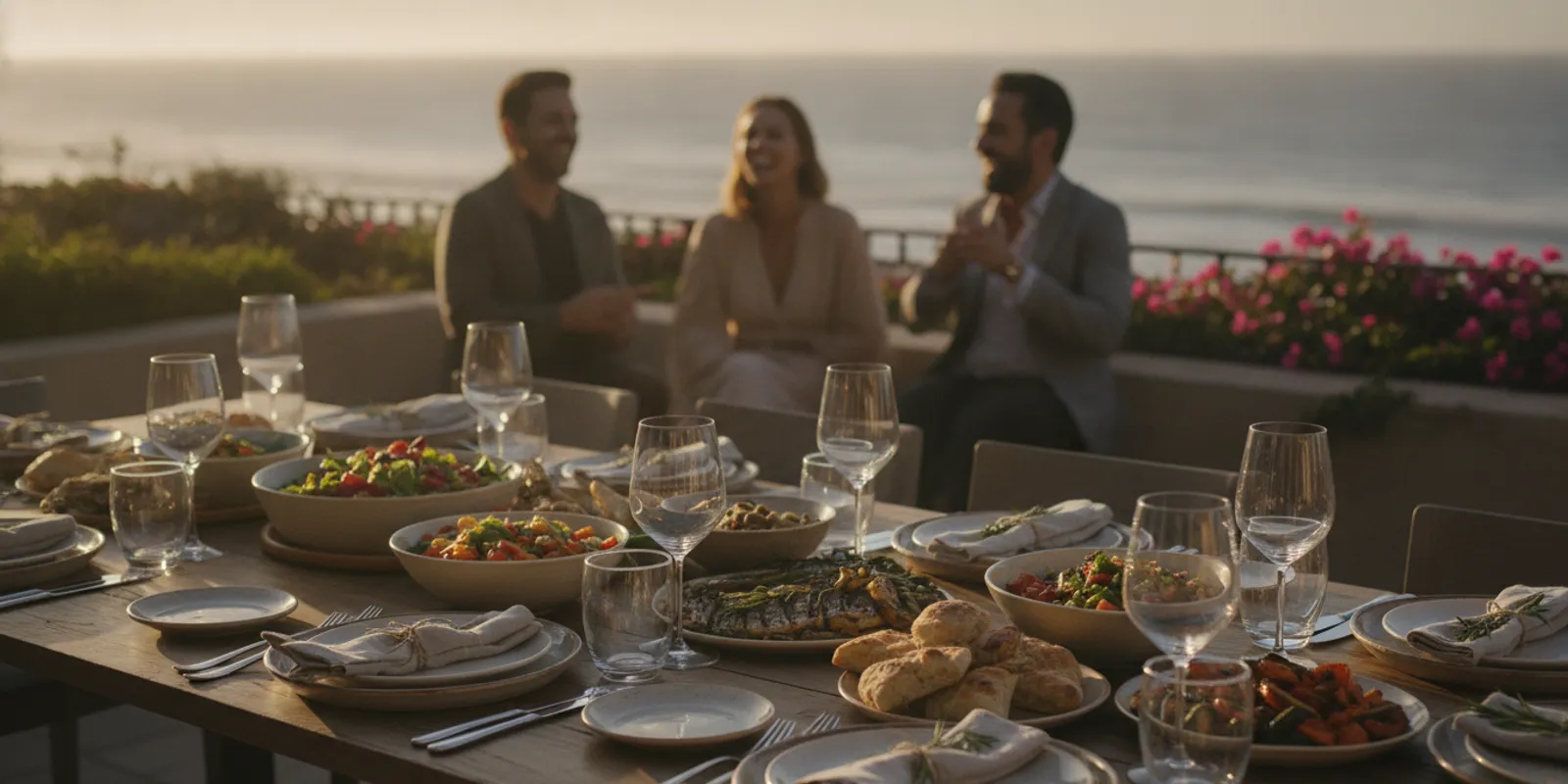
La Jolla offers a distinctive backdrop, but a successful breakfast still depends on guest comfort and a well-organized service plan. An outdoor terrace can make the morning feel open and relaxed. A meeting room may call for a more focused arrangement, with coffee available as guests arrive and a clear path between the food and seating. The setting should support conversation, not compete with it.
Consider what guests will experience from arrival to departure. If the meal begins early, provide a welcoming first point of contact and make it easy to find coffee and seating. If guests are gathering before a presentation, coordinate the meal with the program rather than asking people to choose between eating and listening. If it is a family milestone, leave enough time for conversation and photographs instead of compressing the meal into a narrow window.
Seasonality can add a local note without turning the menu into a theme. California citrus may bring brightness to a morning spread; local avocados can complement savory selections; and seasonal seafood can suit a more substantial brunch when appropriate. The menu should still reflect the guests and the host's preferences. Regional ingredients are options to discuss, not a promise that a particular item will be available on a given date.
Before settling the plan, walk through the space as a guest would. Look for places where lines could form, where a service station could block a doorway, or where sunlight may affect a seating area. In an outdoor setting, consider wind, shade, and the distance between the meal and restrooms or the event program. These small observations give the caterer practical information for planning layout and staffing.
How can hosts make service feel seamless?
Clear roles and a realistic timeline help guests enjoy the event while the host stays focused on welcoming them.
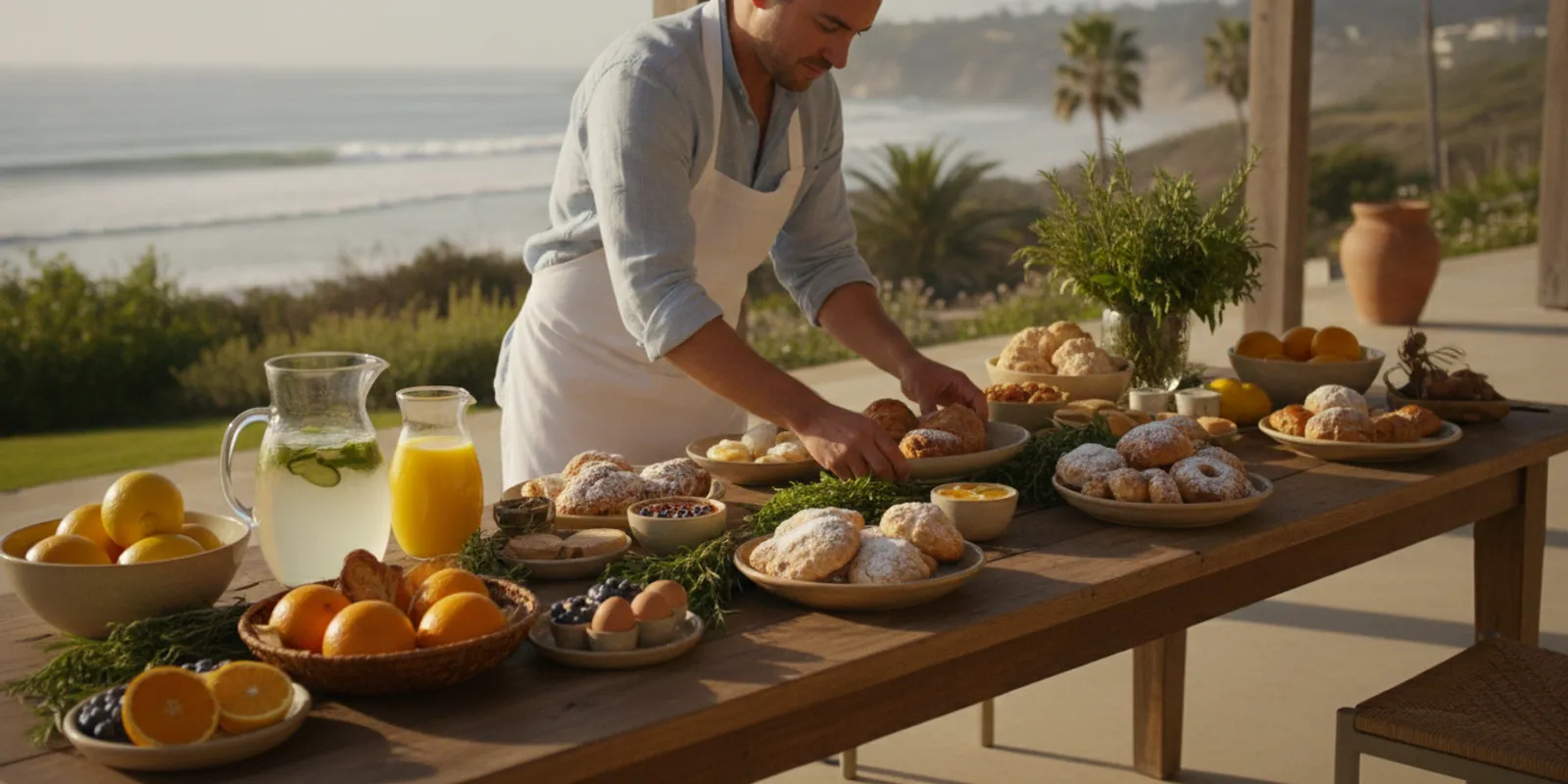
Full-service event execution involves more than preparing dishes. Menu planning, staffing, setup, active service, and breakdown each take coordination. Confirm how those steps fit into the venue's access window. If the room is in use beforehand or another activity follows, the schedule should account for those constraints from the start.
Share an event timeline with the caterer and venue contact. Include when vendors may arrive, when the room must be ready, when guests are expected, when any remarks or presentations begin, and when the space must be cleared. Allow time for guests to arrive gradually rather than assuming everyone will sit down at the same minute.
It also helps to choose one person who can answer event-day questions. That contact should know the room plan and be able to resolve small decisions without repeatedly interrupting the host. For a larger gathering, assign separate people to venue access and guest communication so the caterer can focus on service. Clarify these roles before the event, not at the doorway on the morning itself.
Think through the meal's end as carefully as its beginning. Will guests leave directly after breakfast, move into a meeting, or stay for another activity? Is there a firm venue departure time? Confirm who will direct guests and how the service area will be cleared. A clear close helps the event feel intentional and gives the venue a predictable handoff.
How should you handle dietary details and guest communication?
Collect dietary information early, communicate it clearly, and agree with the caterer on how guests will identify suitable dishes.
Hosts can make the planning conversation more useful by separating preferences from essential dietary requirements. A guest may prefer a certain ingredient, while another may need a specific accommodation. Share the distinction accurately and ask what information the caterer needs to plan responsibly. Do not assume that a menu description alone answers questions about ingredients or preparation.
When guests RSVP, provide a simple way to share relevant needs and a date by which to respond. Keep the information together and pass it to the caterer through the agreed channel. If requirements change, send an update rather than relying on verbal messages that may not reach the right person. Before the event, confirm how dishes will be identified and whom guests can ask if they have a question.
Good communication also prevents avoidable surprises about the event format. Let guests know whether breakfast is seated or informal, whether the schedule is tight, and whether they should arrive at a particular time. If the gathering is attached to a meeting or celebration, state when the program begins. A short, clear invitation can set expectations and make arrival easier for people unfamiliar with the venue.
For a host, these details are not busywork. They help the caterer plan appropriate quantities, service flow, and presentation, while giving guests confidence about what to expect. The final approach should be confirmed directly with the catering team and venue, particularly when a requirement affects preparation or facility use.
Frequently asked questions about catering La Jolla CA
How far ahead should I plan a breakfast event?
Start once you know the likely date, location, and guest count range. Early conversations leave time to coordinate venue rules, menu choices, and service logistics. The appropriate lead time depends on the event date and requirements, so contact the caterer to discuss availability.
Can the menu accommodate dietary or cultural needs?
Menu choices can be tailored to dietary needs and cultural requirements. Share those details during the initial conversation and ask how they will be reflected in the menu and communicated during service. Provide accurate information about allergies and confirm the arrangements before the event.
Does Gather by Oren provide the venue?
No. Gather by Oren coordinates with venue partners as part of catering, but it does not own event venues. The host is responsible for booking the location and confirming its permissions, access, and event rules.
How do I get a quote for my event?
Share your date, location, estimated guest count, event schedule, service preferences, and menu considerations. Gather can use those details to discuss a personalized consultation and quote. Start with the San Diego catering consultation page to reach the team.
A thoughtful La Jolla breakfast brings together a fitting menu, attentive service, and a plan that respects the venue and the morning schedule. With those details aligned, you can welcome guests and focus on the reason everyone has gathered.
Comments