
Interactive Food Stations Corporate Events San Diego Guide

Updated: 6 days ago
At a corporate gathering, the most successful menu often does more than feed guests. It gives people a reason to move, talk, and remember the experience long after the final course. In San Diego, a chef-led station fits an intimate La Jolla leadership dinner, a waterfront reception near the USS Midway, or a large company celebration. Guests can arrive throughout the evening.
For interactive food stations corporate events san diego, choose staffed, live-preparation experiences that reflect your event goals, guest profile, venue, and season. A thoughtful mix can support networking while giving guests a fresh, elevated meal experience.
Unlike a passive grazing display, an interactive station creates a focal point through movement, aroma, and personal service. The right combination also makes it easier to balance conversation with dining. Your menu can feature California citrus, local avocados, seasonal seafood, or more substantial chef-prepared courses. For broader planning guidance, explore our corporate catering in San Diego guide.
Tell us your vision for full-service corporate event catering, and we will help shape the menu and service around it.
What Interactive Food Stations Bring to Corporate Events in San Diego
Interactive food stations turn a meal into part of the event itself. Chefs prepare and serve menu items live, creating movement, conversation, and a more memorable experience than a passive spread.
A staffed interactive station is an action-oriented service point where a chef finishes, assembles, slices, or plates food while speaking with guests. The preparation is visible, but the experience is still polished and efficient. Guests might watch a chef finish seasonal pasta, carve a composed entree, or build a plate around their preferences while moving naturally through the room.
That is distinct from a grazing table, where pre-arranged platters and composed displays are available for guests to approach and serve themselves. Grazing can be beautiful and useful for a reception, especially when guests need to take small bites between conversations. Grazing tables for corporate events offer a more passive rhythm, while an interactive station adds a human point of connection and a sense of culinary momentum.
Engagement without interrupting the program
For corporate events, the value is not simply visual novelty. Watching chefs prepare distinctive menu items gives guests something to discuss and creates a focal point that can draw people into the experience. Action stations are documented as both entertaining and suitable for receptions or main meal service. That makes them adaptable for an executive gathering, a client reception, or a company celebration. Research on action-station service also identifies guest mobility as a central benefit.
A better flow for networking
Because guests do not have to remain at assigned seats, stations can help disperse a room and encourage natural introductions. That flexibility is valuable in La Jolla conference spaces, Del Mar event venues, waterfront settings, and rooftop venues where the goal is often to keep people circulating. A guest can pause for a freshly prepared bite, exchange ideas with a colleague, then continue toward another station or conversation.
The format also works well when seating is limited. Rather than building the entire event around a single dining area, planners can use stations to create purposeful zones throughout the venue. A San Diego waterfront reception, for example, might use one station near the view and another closer to the bar or networking area. That gives the room an inviting rhythm without making service feel fragmented.
Theater, aroma, and a sense of occasion
Live preparation contributes more than flavor. The movement of the chef, the finishing touches, and the aroma of food cooking add sensory energy to the room. This theater-like atmosphere helps a corporate event feel considered rather than routine, while still allowing the menu to reflect the company, season, and guest profile. California citrus, local avocados, and seasonal seafood can all be presented with the level of care expected at a premium San Diego event.
For planners comparing formats, the decision should begin with the desired guest experience, not just the menu. A display may support quick, casual access. Interactive food stations are better when the event should encourage engagement, conversation, and discovery. For a broader planning framework, see this guide to corporate catering in San Diego.
Popular Interactive Food Stations for Corporate Catering
The strongest station menus move from familiar comfort to polished culinary theater, giving guests choice while keeping the event flowing. For a complete planning framework, explore these corporate catering ideas alongside your venue, agenda, and guest profile.
Interactive stations can feel casual or upscale depending on the ingredients, presentation, and level of chef interaction. That range makes them useful for a La Jolla leadership reception, a Del Mar product launch, or a company celebration overlooking the harbor. Each station creates a small point of energy where guests can watch, ask questions, customize a plate, and continue the conversation.
Station | Experience | Best For |
Live pasta. | Chef-finished, made to order. | Networking receptions. |
Carving. | Classic centerpiece service. | Milestones and dinners. |
Sushi and crudo. | Refined, seasonal presentation. | Executive and coastal events. |
Premium taco bar. | Customized Baja-style plates. | Company celebrations. |
Artisanal sliders. | Handheld, relaxed service. | Casual team gatherings. |
Dessert crepes. | Warm, finished-to-order sweets. | Evening receptions. |
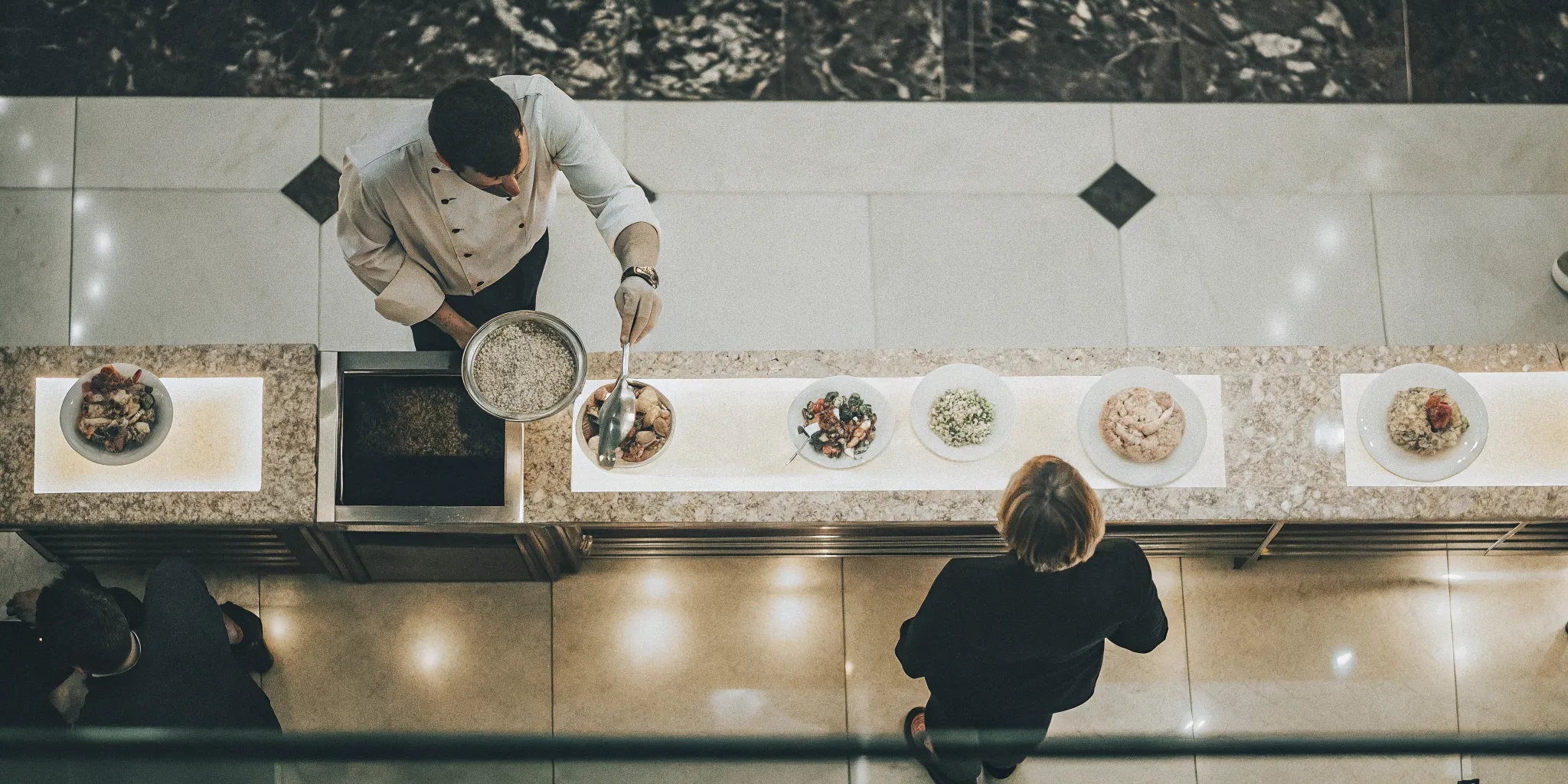
Live pasta and carving stations
A live pasta station brings aroma, movement, and immediate customization to the room. Guests can select a preparation that suits their preferences while a chef finishes each portion in view. A carving station offers a more traditional focal point, with a composed presentation that works well for seated dinners, recognition events, and formal gatherings. Venues such as Rancho Valencia or The Abbey on 5th suit this format beautifully.
Sushi, crudo, and a premium taco bar
Sushi and crudo create a lighter, more refined experience for executive receptions and waterfront events. Seasonal seafood, bright California citrus, and careful knife work can make the station feel distinctly coastal without overwhelming the rest of the menu. For a more social format, a build-your-own taco bar can take inspiration from Baja cuisine while remaining polished. Think chef-prepared fillings, house accompaniments, local avocados, and fresh garnishes rather than a one-size-fits-all spread.
Sliders and dessert crepes
Artisanal sliders are approachable for team celebrations, late-afternoon gatherings, and events where guests will be standing or moving between activities. A dessert crepe station provides a warm finish and an engaging final interaction, with fillings and toppings adjusted to the occasion. Both formats can be elevated through thoughtful sourcing and professional presentation.
San Diego's regional pantry gives each station a distinct sense of place. Seasonal ingredients worth featuring include:
California citrus, from blood oranges to Meyer lemons, for sauces, salsas, and desserts.
Local avocados for premium taco bars, salads, and composed crudo plates.
Seasonal seafood such as local halibut, spot prawns, and line-caught ocean fish.
Fresh herbs and specialty produce from nearby farms across San Diego County.
For a complete meal, combining three or four stations creates variety without asking guests to commit to one format. A chef-led team can also balance richer stations with seasonal produce, lighter seafood, and tray-passed bites so the menu feels abundant but intentional. The result is a customizable dining experience that supports the event rather than competing with its purpose.
Choose stations that reflect the event's tone, then combine three or four formats for a varied meal. In San Diego, premium Baja flavors, California citrus, local avocados, and seasonal seafood can make the experience both interactive and unmistakably regional.
How to Match Food Station Formats to Your Event Goals and Guests
Match service style to the event goal first, then shape menu, staffing, and station count around the room.
Networking receptions need movement
For a waterfront reception, rooftop gathering, or office campus mixer, the priority is conversation rather than a formal meal. A staffed interactive station gives guests a natural reason to circulate, order something fresh, and continue a discussion while the chef prepares it. Place stations in separate areas of the room so one line does not become a bottleneck. Tray-passed bites can fill the gaps between visits, while a display adds an easy grazing point for guests who want to keep talking.
This is where format matters. Grazing tables for corporate events work well when the goal is relaxed, self-directed access to composed platters. Interactive stations are the stronger choice when the event should feel more social, chef-led, and made-to-order. For a larger or more elevated reception, combining stations with display or tray-passed service creates variety without asking every guest to wait for the same experience (F004, F017).
Milestone celebrations benefit from a focal point
Product launches, leadership celebrations, awards evenings, and client appreciation events often call for a memorable culinary moment. Choose a station that reflects the tone of the occasion, such as seasonal seafood, chef-carved proteins, live pasta, or a refined dessert finish. The preparation itself becomes part of the atmosphere, with visual action and inviting aromas adding energy to the room (F001, F011, F021). In a San Diego setting, a menu might draw on California citrus, local avocados, or seasonal seafood while remaining aligned with the company's audience and brand.
All-day training sessions need practical flow
For a conference center or full-day office training, guests need flexible access without losing valuable session time. Stations work especially well when seating is limited because they allow a more adaptable room setup (F014). Consider staggered service windows, compact footprints, and a combination of one interactive feature with display items that can be accessed quickly. Dietary questions can also be handled in real time by professional staff, which is useful when attendees have varied needs (F018).
Scale the service to the guest count
Guest count affects station quantity, access points, and staffing. One double-sided station can serve up to 100 guests, providing a practical planning benchmark for smaller gatherings or one component of a larger meal (F028). For larger events, add stations or pair them with display and tray-passed service rather than forcing every guest through one queue. A service plan can also distinguish between a complete meal and a reception where stations are one part of the overall offering.
Use these questions to match formats to your event:
Is the priority networking and movement, or a seated formal meal?
How long will guests stay, and will they arrive in one wave or throughout the event?
What is the venue footprint, including power, access, and seating constraints?
Should the menu feel coastal, seasonal, or aligned with a specific company theme?
Choose interactive stations when engagement, movement, and chef-led preparation support the event goal; use display or tray-passed service when speed and easy access matter more. The best plan accounts for guest count, seating, venue flow, and the level of interaction you want guests to remember.
Staffing and Presentation Standards for Interactive Stations
Executive-grade interactive stations depend on more than a compelling menu. Chef-led preparation, polished staffing, careful dietary handling, and disciplined event logistics keep the experience elegant from the first guest arrival through breakdown.
At Gather by Oren, an interactive station is an active culinary service point, not a self-serve display. A chef prepares and finishes each item in view of guests, while professional service staff maintain the surrounding presentation, replenish ingredients, clear finished plates, and keep traffic moving. The result should feel effortless, even when the station is creating energy in a reception at The Abbey on 5th. Corporate gatherings at a La Jolla office campus or a waterfront event near Coronado set the same standard.
Live preparation also creates a useful quality-control checkpoint. Chefs can monitor temperature, texture, seasoning, and portioning as service unfolds rather than relying on food that was prepared entirely in advance. This is especially important when seasonal ingredients such as California citrus, local avocados, or seasonal seafood are central to the menu. Action stations are recognized for letting chefs prepare and serve distinctive items while interacting with guests, creating both engagement and culinary theater (action-station research).
Real-time dietary care
Dietary needs should be addressed before the event, then managed attentively at the station. A chef or designated culinary lead can answer questions, confirm ingredients, prevent cross-contact where applicable, and guide a guest toward an appropriate preparation. This direct interaction is more reassuring than relying on an unlabeled platter or a generic menu card. Planning teams should share known allergies, cultural requirements, and dietary preferences during menu development so the service team can execute confidently in real time.
Staffing for a seamless guest experience
Interactive preparation requires more culinary attention than a simpler display service because chefs are preparing unique items, serving guests, and engaging with them simultaneously. Staffing should account for the number of stations, menu complexity, guest flow, and venue layout. Uniformed professionals coordinate with venue teams and office-campus contacts on power, placement, access, sanitation, service timing, and breakdown. For a polished full-service experience, setup, service, and breakdown are planned as one continuous operation. Professional catering quotes often allow roughly two hours for setup, which is why station logistics need to be scheduled well before guests arrive.
Full-service staffing for interactive stations typically covers:
Chefs dedicated to live preparation, plating, and guest interaction at each station.
Service staff for replenishment, clearing, and keeping traffic flowing.
Event leads who coordinate timing, venue contact, and special requests.
Setup and breakdown crews who handle the full event lifecycle.
Final headcount is another important operational checkpoint. A planning benchmark used by professional caterers is to confirm the final count about 72 hours before the event. That gives culinary and service teams time to prepare accurately. With those details settled, the station can look composed, welcoming, and fully integrated into the event rather than like an afterthought.
How to Design Your Corporate Food Station Experience with Gather by Oren
A thoughtful station plan pairs customized menus, seasonal California ingredients, and polished service.
Gather by Oren begins with your goals rather than a fixed package. An executive gathering in La Jolla may call for refined, efficient stations that support conversation. A company celebration at the USS Midway, a waterfront space, or a Rancho Santa Fe property may invite a more expansive culinary experience. Chef Oren Koreh can help shape the menu around your company culture, guest preferences, dietary needs, venue, and season. The plan can feature California citrus, local avocados, and seasonal seafood where they suit the occasion.
The process also accounts for the practical details that make interactive service feel effortless. Gather by Oren provides menu design, professional staffing, setup, service, and breakdown, allowing your planning team to focus on the people in the room. The team has served events for 750 or more guests, while the menu and station plan remain tailored to the character of each event.
- Share your event vision and goals.
Discuss the occasion, company culture, schedule, guest profile, venue, desired atmosphere, and how you want food to support networking or celebration.
- Consult with Chef Oren on the menu and stations.
Explore a fully customized combination of live preparation, chef-served selections, and complementary reception elements. The menu can balance familiar preferences with elevated, seasonal details.
- Confirm headcount and venue logistics.
Review guest flow, station placement, access to utilities, seating, service timing, dietary considerations, and the space required for a smooth experience. These decisions help the culinary and service teams prepare accurately.
- Enjoy chef-led service and seamless breakdown.
On event day, professional staff prepare and serve the food, engage with guests, maintain presentation and quality, and handle setup and breakdown with care.
For a broader planning framework, explore this guide to corporate catering in San Diego. You can also review Gather by Oren's full-service corporate event catering capabilities before requesting a consultation.
The best corporate food station experience starts with a conversation about your goals, guests, venue, and vision. Gather by Oren turns that brief into a fully customized, seasonal menu with chef-led service from first setup through final breakdown.
Frequently Asked Questions
Are interactive food stations priced per person?
Typically, yes, but the final quote depends on the guest count, selected stations, staffing, service style, venue requirements, and event timing. Because every San Diego corporate event has a different flow and menu brief, Gather by Oren recommends requesting a tailored consultation rather than relying on a fixed rate.
Is there a minimum order requirement for interactive stations?
Minimums can vary according to the event date, location, guest count, and service format. A consultation will clarify whether the planned experience is the right fit for your gathering and outline the menu, staffing, and logistics included in the proposal.
What is included in a catering quote for interactive stations?
A complete proposal should clearly identify the menu, station setup, chef and service staffing, service duration, presentation needs, and breakdown responsibilities. Gather by Oren provides full-service event execution, including menu design, professional staffing, setup, service, and breakdown. Any dishware, rental, venue, or extended-service requirements should be confirmed in the proposal.
How far in advance should I confirm the final head count?
Plan to confirm the final head count at least 72 hours before the event when possible. This gives the culinary and service teams time to refine purchasing, preparation, station quantities, dietary accommodations, and staffing. Earlier confirmation is especially helpful for larger events or programs held at venues with detailed load-in requirements.
Can interactive stations accommodate dietary needs?
Yes, menus can be customized around documented dietary needs and cultural requirements. Share restrictions during planning so chefs can design suitable dishes, identify ingredients clearly, and organize service that helps guests choose with confidence. The goal is a smooth experience without interrupting the event.
Ready to Plan Your Corporate Food Station Experience?
Interactive stations can give your San Diego corporate event a more engaging, personalized flow while keeping service polished from setup through breakdown.
Request a personalized consultation and custom quote for your event. Contact us to get started.


Comments