
Mediterranean Food Bar Mitzvah San Diego Guide

A Bar Mitzvah menu should do more than serve a crowd. It should welcome multiple generations, reflect the family's story, and bring energy to the celebration. Whether the event takes place in La Jolla, Del Mar, Coronado, or a private home.
Tell Gather by Oren your vision for a personalized consultation and menu plan.
Mediterranean food bar mitzvah San Diego celebrations can feel especially memorable because shared plates, vibrant produce. Warm breads, and layered flavors create an inviting experience for guests of different ages and dietary preferences.
Mediterranean cuisine also gives families room to shape the meal around tradition, season, venue, and the guest experience they want to create. From a polished seated dinner to a relaxed family-style reception, the right menu can make the celebration feel abundant without losing its sense of refinement. Here is why this culinary approach works so naturally for a San Diego Bar Mitzvah.
Why Mediterranean Food Is a Natural Fit for a San Diego Bar Mitzvah
Mediterranean food creates a warm, flexible foundation for a San Diego Bar Mitzvah. It brings family and friends together through shared abundance, seasonal ingredients, vivid presentation, and flavors that can feel both familiar and fresh.
A Bar Mitzvah brings together several generations, varied preferences, and guests who may know the family in different ways. Mediterranean-inspired catering suits that mix because the experience can be generous and communal without feeling informal. Guests can discover new flavors while still finding approachable combinations, and the family can shape the menu around its traditions, preferences, and the character of the celebration.
That sense of abundance also works beautifully across San Diego event settings. A luncheon after services in Carmel Valley, an elegant dinner in Rancho Santa Fe, or an outdoor celebration near La Jolla each calls for a different rhythm. Gather can adapt the format to the venue and guest experience, whether the occasion calls for a seated dinner, a luncheon, or interactive food stations. The menu remains personalized rather than locked into a standard package.
A table with color, texture, and connection
Mediterranean food makes presentation part of the celebration. Fresh seasonal ingredients, layered textures, aromatic herbs, and natural color can create a table that feels festive before the first bite. That visual richness photographs beautifully, while shared elements encourage conversation among relatives, friends, and younger guests. The result is polished enough for a formal reception and welcoming enough for a multigenerational gathering.
Shared formats invite guests to interact and choose what suits them.
Seasonal ingredients bring freshness and a clear sense of place to the celebration.
Color, aroma, texture, and thoughtful presentation make the meal feel memorable.
Flexible planning supports different dietary needs and family preferences.
Chef Oren's Mediterranean and Middle Eastern expertise, rooted in his Israeli heritage, gives this approach a personal point of view. His hands-on relationship with produce supports menus that feel connected to both agricultural tradition and Southern California's seasonal abundance. Families looking for further Mediterranean menu inspiration can explore how a cuisine-led celebration balances refinement with heartfelt hospitality.
For San Diego families, the appeal is not simply a theme. It is an opportunity to create a meal that reflects the occasion, welcomes every generation, and feels distinctly their own.
What Makes Mediterranean Food for a San Diego Bar Mitzvah Feel Personal?
Mediterranean food feels personal when it reflects the family's traditions, the guest list, and the character of the celebration rather than following a fixed menu.
A meaningful Bar Mitzvah menu can welcome several generations at once. One family may want familiar flavors presented with a modern touch. While another may want dishes that recall a grandparent's table, a summer in Israel, or a favorite family gathering. The goal is not to make every plate identical. It is to create a thoughtful progression of flavors, textures, and serving styles that gives each guest a way to participate.
That perspective is central to Chef Oren's cooking. His Mediterranean and Middle Eastern expertise is rooted in his Israeli heritage, and he grew up in a farming family in a village north of Galilee. That agricultural background informs how he thinks about food: produce should have a clear place in the experience. And ingredients should support the story of the meal rather than serve as decoration. In San Diego, he personally selects produce at local markets before dawn, using those choices to shape seasonal menus and protect ingredient quality.
For a family planning a Mediterranean food Bar Mitzvah in San Diego, this connection can translate into a menu that feels both geographically grounded and genuinely individual. California produce, bright herbs, warm spices, and carefully considered proteins can sit alongside family requests without turning the event into a generic theme. The menu might also be designed around a synagogue reception, a private home, or a venue in La Jolla, Del Mar, Rancho Santa Fe, or Carmel Valley.
Ask which family flavors, stories, and traditions should be represented.
Share the guest profile, including children's preferences and multigenerational expectations.
Discuss cultural requirements, service customs, and dietary needs before dishes are finalized.
Cultural sensitivity should be explicit during planning. If a family requests kosher-style service, the caterer should clarify exactly what that means for ingredients, preparation, dairy, meat, and service expectations. Gather by Oren should not be presented as kosher certified. Families with formal certification requirements should confirm those standards with their synagogue or designated authority and discuss them with the catering team early.
Dietary flexibility is part of personalization, not an afterthought. Menus can be adapted to the family's vision, cultural requirements, venue, season, and dietary needs, with thoughtful alternatives that still feel complete and celebratory. For broader planning context, review this Bar Mitzvah catering guide, then bring the details that matter most to a consultation.
Which Mediterranean Courses Work Best for a Mitzvah Menu?
The strongest Mediterranean Mitzvah menus move from bright, shareable beginnings to satisfying main courses and a celebratory finish. They leave room to adapt the details to the family, season, venue, and dietary needs.
A thoughtful course progression gives guests different ways to participate. Passed bites can welcome family and friends as they arrive, while shared starters create an easy rhythm around the table. Later courses can become more substantial without losing the freshness and color that make Mediterranean food feel especially suited to a San Diego celebration.
The categories below are starting points for menu design, not a fixed package or a list of guaranteed dishes. Mediterranean cooking is shaped by local agriculture, climate, and cultural traditions. The most compelling version for a La Jolla luncheon may differ from one designed for an evening celebration in Rancho Santa Fe. For additional inspiration, explore this Mediterranean menu inspiration.
Course | Guest experience | Seasonal direction |
Passed bites | A polished welcome that encourages mingling before guests sit down or visit the next part of the celebration. | Small-format tastes can follow the season with fresh herbs, California citrus, vegetables, or other ingredients selected for the event. |
Mezze and shared starters | A generous, social opening with varied textures, colors, and flavors that guests can enjoy at their own pace. | Vegetables, legumes, nuts, seeds, grains, and olive oil offer a flexible foundation for a bright California interpretation. |
Salads and seasonal produce | A refreshing course that brings acidity, crunch, fragrance, and visual contrast to the table. | Menus may reflect the market with leafy greens, peak produce, herbs, avocados, or citrus when appropriate. |
Main courses | A composed centerpiece that feels festive while offering enough choice for a mixed-age guest list. | Depending on the family's preferences, the season may guide the use of fish, poultry, vegetables, grains, or other Mediterranean-inspired preparations. |
Desserts | A joyful conclusion with small portions or shared selections that complement the celebration without making the meal feel heavy. | Fresh fruit, citrus, nuts, spices, and delicate baked or chilled elements can be considered alongside the event's overall style. |
A balanced menu often works best when it includes:
At least one familiar option alongside more distinctive flavors, so children, grandparents, and out-of-town guests all feel considered.
Vegetable-forward choices that bring color and substance rather than treating dietary flexibility as an afterthought.
Clear coordination with the family about cultural requirements, allergies, and the venue's service format before the final courses are selected.
Chef Oren's Mediterranean and Middle Eastern expertise, rooted in his Israeli heritage, supports this kind of tailored progression. Gather by Oren develops menus around the family's vision and the occasion, with fresh seasonal ingredients, elevated flavors, and presentation treated as part of the guest experience. The result should feel abundant and refined, but also personal to the Bar Mitzvah being celebrated.
How Can Service Style Shape the Celebration?
The right service style gives a Bar Mitzvah its rhythm, from a relaxed post-service luncheon to a polished seated dinner or an energetic evening of stations. The best format balances the family's hosting vision, guest ages, venue layout, and the moments that deserve everyone's attention.
Service is not simply a choice between plated and buffet dining. It determines how guests move, converse, welcome one another, and experience the menu. A luncheon can create an easy transition after a synagogue service, while a seated dinner gives the celebration a more formal cadence. Family-style service keeps platters moving around the table and encourages conversation across generations. Stations invite guests to explore at their own pace, and a cocktail reception keeps the room fluid for mingling, speeches, and dancing.
- Begin with the celebration's schedule.
For a post-service luncheon, the menu and staffing plan should support a smooth arrival as guests move from the ceremony into the meal. For an evening reception, the team can create a sequence of passed bites, stations, dinner, and dessert that leaves room for the hora, speeches, and family photographs.
- Match the format to the guest experience.
Seated dinners suit hosts who want everyone gathered for a shared meal and clear program transitions. Family-style service adds warmth and generosity around the table. Stations work especially well when guests have varied appetites or when the family wants food to become part of the celebration's visual energy. A cocktail reception can offer substantial small plates while keeping guests connected to the room.
- Coordinate the menu with the venue.
A synagogue social hall, private home, hotel ballroom, or outdoor setting in La Jolla, Del Mar. Or Rancho Santa Fe may each have different access, kitchen, power, refrigeration, traffic, and setup considerations. The caterer should coordinate arrival timing, service placement, rentals, table flow, and breakdown with the venue's designated staff. Gather's full-service model includes customized menu design, professional staffing, setup, service, and breakdown, while the event remains hosted at the family's selected venue.
- Design for the whole room.
Mediterranean food can support both intimate and expansive formats through colorful shared plates, seasonal produce, composed courses, and interactive service. Chef-led planning helps connect presentation and pacing, so the meal feels refined without becoming rigid. Menus can be adapted to the family's preferences, dietary needs, cultural requirements, season, and venue.
For families comparing formats, San Diego Mitzvah catering should include more than a menu. Look for a team that can translate the day's emotional arc into thoughtful hospitality, with clear communication before guests arrive and attentive execution through the final course.
How Do San Diego Seasons Influence a Mediterranean Mitzvah Menu?
Seasonal planning lets a Mediterranean Mitzvah menu reflect San Diego's produce, climate, venue, and family preferences while keeping every course fresh, colorful, and personal.
A bespoke menu should begin with what is vibrant in the market, not with a fixed package. In San Diego, that might mean bright California citrus, creamy local avocados, fragrant herbs, or seasonal seafood when it suits the event and the family's preferences. These ingredients can bring freshness and visual energy to a celebration without losing the generous, shared spirit of Mediterranean dining.
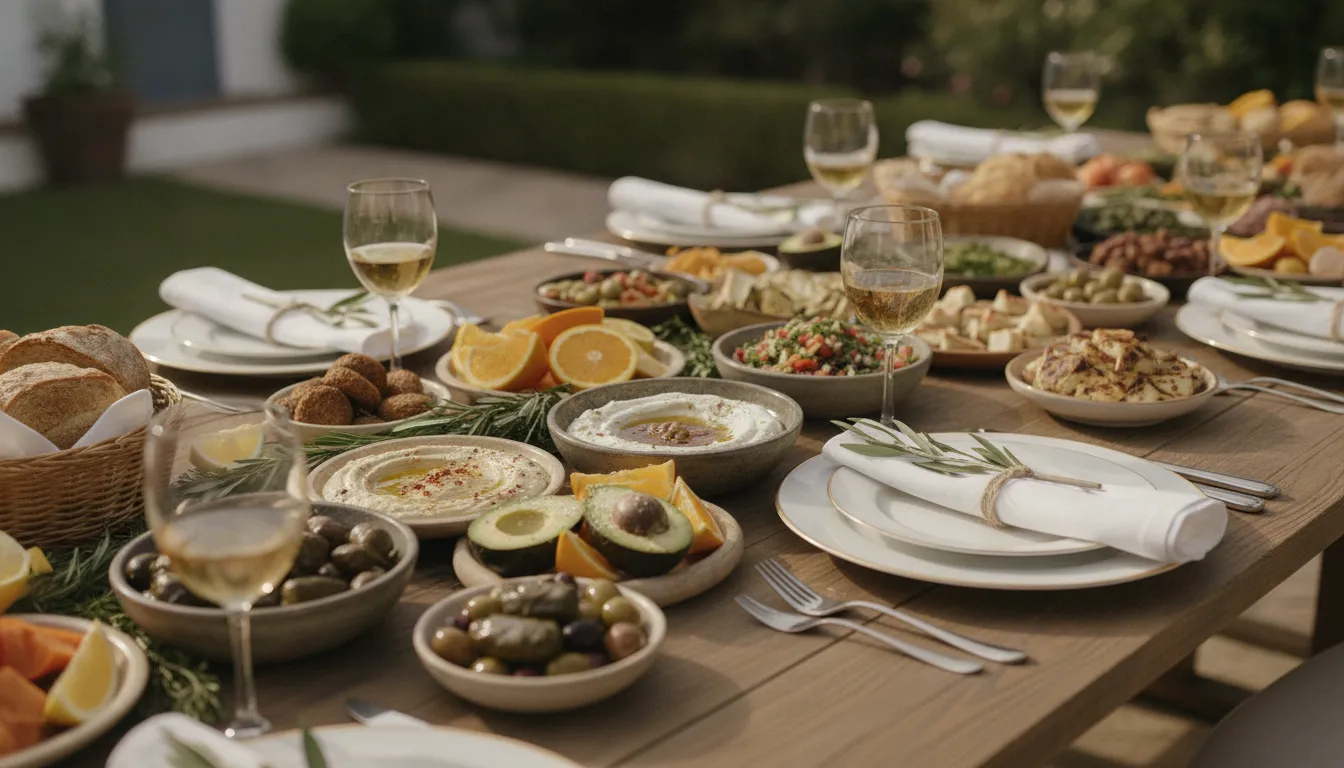
Seasonality also shapes balance. Mediterranean cooking is grounded in local agriculture, climate, and cultural traditions, with plant-forward ingredients, olive oil, herbs, and spices providing a flavorful foundation. A chef may use citrus to sharpen a composed salad, herbs to lift grilled vegetables, or avocado to add richness to a carefully plated first course. Seasonal seafood may offer another elegant option for a coastal celebration. It should be selected around availability, service timing, and guest needs rather than treated as a guarantee.
Chef Oren's connection to agriculture gives this approach a personal dimension. Raised in a farming family north of Galilee, he brings a produce-led perspective to menu development and personally selects ingredients at local San Diego markets before dawn. That attention can translate into a menu that feels connected to both Mediterranean culinary heritage and Southern California's landscape.
Adapting the menu to the setting
The same seasonal direction can feel different in La Jolla, Del Mar, Rancho Santa Fe, Carmel Valley, Point Loma, Solana Beach, Coronado, or near Mission Bay. An outdoor celebration may call for bright, composed dishes that hold beautifully in a warm coastal setting. A more formal indoor dinner may emphasize plated presentation, layered textures, and a carefully paced progression of courses.
Spring and summer menus may highlight citrus, tender herbs, tomatoes, stone fruit, and lighter seafood preparations.
Cooler months can support roasted vegetables, hearty grains, legumes, warm spices, and richer sauces.
Every season can be adjusted for dietary needs, cultural requirements, venue logistics, and the family's preferred level of tradition.
This flexibility is especially valuable for families seeking Mediterranean food for a San Diego Bar Mitzvah that feels elevated yet heartfelt. The result is not simply a collection of seasonal ingredients. It is a menu that makes the setting, occasion, and people around the table feel thoughtfully connected.
What Should Families Ask Before Booking a Mediterranean Caterer?
Ask how the caterer will translate your family's traditions, guest needs, venue logistics, and celebration schedule into one thoughtful dining experience.
A menu consultation should feel like a conversation about your family, not a choice between a few fixed options. Ask how the caterer adapts dishes, service style, and presentation to your vision, the season, and the setting. Gather by Oren develops bespoke menus around the family's preferences, cultural requirements, dietary needs, venue, and season, so the initial discussion should make those details central.
How will you customize the menu?
Ask whether the chef can shape the flavors, courses, portion style, and presentation around the family. You might want a refined luncheon after services, a seated dinner in Rancho Santa Fe, or interactive stations for a lively gathering in La Jolla or Carmel Valley. Request to review
for a sense of how the approach can evolve.
- How will you handle cultural and dietary needs?
Discuss family traditions, ingredient preferences, allergies, vegetarian or other dietary requirements, and the level of kosher-style accommodation you need. Ask how those needs will be documented and communicated to the kitchen and service team. If your family has specific religious requirements, clarify them early and confirm exactly what the caterer can support.
- Who will manage the event on site?
Ask about staffing levels, the responsibilities of the event lead, and how the team will coordinate setup, service, replenishment, and breakdown. A full-service model should include customized menu design, professional staffing, setup, service, and breakdown, rather than leaving your family to manage the practical details during the celebration.
- How will you coordinate with our venue?
Confirm when the caterer will speak with the synagogue, private venue, planner, or rental team. Discuss kitchen access, load-in, table placement, service timing, rentals, cleanup expectations, and any restrictions that could affect the menu or flow.
- Can we schedule a tasting, and when should we finalize?
Ask whether a tasting can help refine seasoning, textures, presentation, and portion style. Also establish milestones for the guest count, dietary list, final menu, rentals, and service timeline. Starting early gives the chef and venue time to resolve details without placing pressure on the family.
The best fit will welcome detailed questions and answer them with a clear process. Look for a culinary partner who can combine cultural sensitivity with polished execution, while keeping the food personal, seasonal, and appropriate for the way your guests will gather.
Share your Bar Mitzvah vision with Gather by Oren before finalizing your menu.
Frequently Asked Questions About Mediterranean Food for a San Diego Bar Mitzvah
Is Mediterranean food suitable for a San Diego Bar Mitzvah?
Yes. Mediterranean food offers colorful produce, aromatic herbs, shared plates, and flexible course formats that can feel both celebratory and welcoming to multiple generations. A menu can also reflect the family's traditions, the venue, the season, and individual dietary needs.
What is a kiddush luncheon?
A kiddush luncheon is the meal held after a Shabbat morning Bar or Bat Mitzvah service, often at the synagogue. Traditional versions may include dairy or pareve dishes, salads, fruit, and sweets served in a buffet-style format. Mediterranean flavors can provide a fresh, polished interpretation while respecting the event's requirements.
Can a Mediterranean menu accommodate kosher-style or other dietary requirements?
A caterer can discuss kosher-style preferences, dairy or pareve service, allergies, vegetarian selections, and other dietary needs during menu planning. Gather by Oren does not claim kosher certification, so families with formal kosher requirements should confirm their standards and venue policies before booking.
Can Mediterranean catering work at a San Diego synagogue or private venue?
Yes. The service plan can be shaped around a synagogue luncheon, a private celebration in La Jolla or Del Mar, or another San Diego County setting. Gather by Oren's full-service model includes customized menu design, professional staffing, setup, service, and breakdown, with logistics coordinated around the venue and event timeline.
Plan Your Mediterranean Bar Mitzvah Menu With Gather by Oren
A tailored menu can bring family traditions and seasonal San Diego ingredients together. It can also capture the energy of your celebration in a way that feels personal to your guests. Share your family's vision, event setting, and dining preferences with Gather by Oren to begin shaping the experience.
Contact Gather by Oren to request a personalized Mediterranean Bar Mitzvah menu consultation.


Comments