
What Food Is Served at a Bar Mitzvah? A Complete Guide to Mitzvah Menus

What food is served at a Bar Mitzvah? There is no single required menu. Most celebrations combine welcoming appetizers, a substantial meal or interactive stations, fresh sides, dessert, and drinks, shaped by the family's traditions, the guest list, the venue, and the level of kosher observance. In San Diego, seasonal California produce and Mediterranean flavors can make the menu feel both familiar and distinctly personal.
Tell Gather by Oren your vision and start planning a custom Bar Mitzvah menu with Chef Oren.
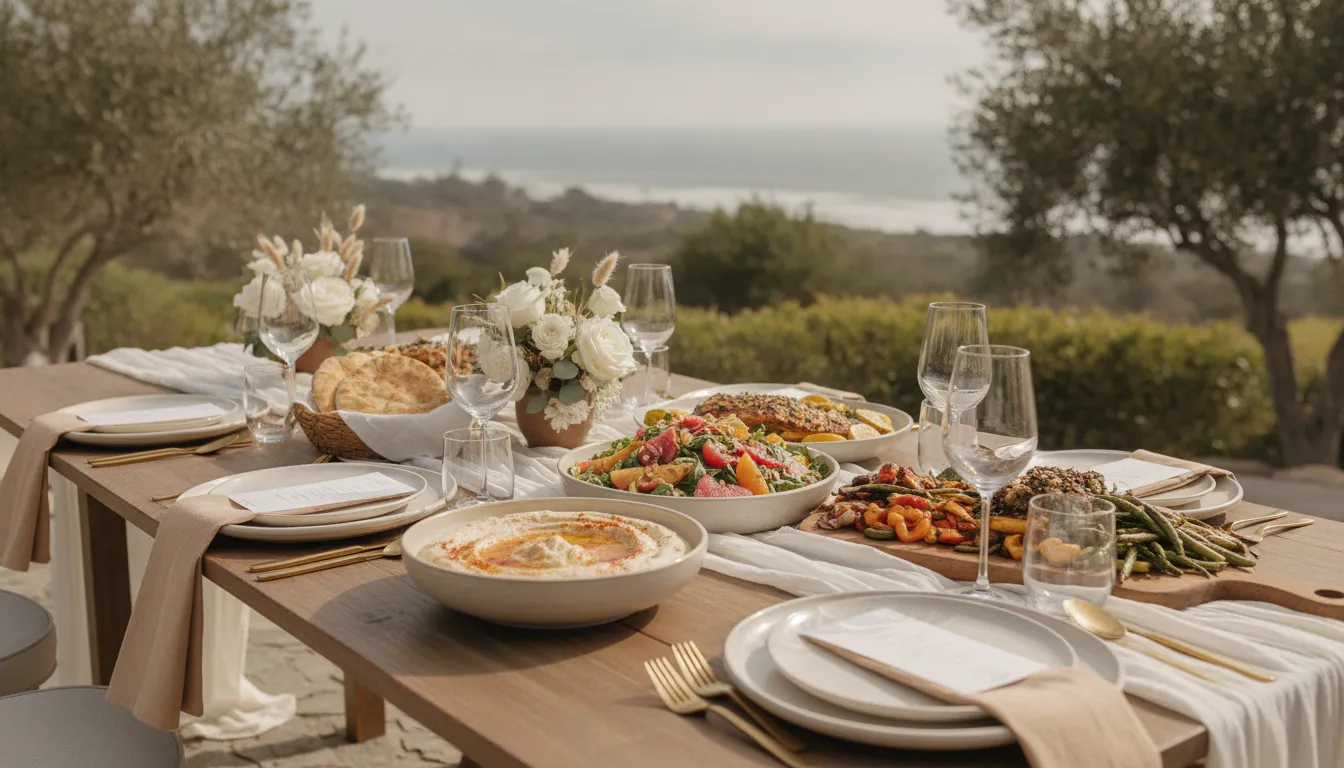
What Is Traditionally Served at a Bar Mitzvah Reception?
A traditional Bar Mitzvah reception may include challah, salads, vegetables, a meat or dairy entree, familiar Jewish dishes, and a celebratory dessert. The exact menu depends on the family's heritage, observance, reception timing, and whether the meal is being served after a synagogue service or as an evening party.
Food at a Bar or Bat Mitzvah is not defined by one universal menu. Some families want a luncheon with a generous spread after the service. Others plan a formal dinner, cocktail-style reception, or a party with chef-attended stations. The most meaningful menus often balance recognizable dishes with a few details that reflect the child and family.
Traditional elements can be included in different ways:
Challah or beautifully presented breads to welcome guests.
Fresh salads, roasted vegetables, and seasonal sides.
Kugel, gefilte fish, herring, brisket, or matzo ball soup when they are meaningful to the family.
Chicken, salmon, or another carefully prepared entree selected around the service style.
Fruit, pastries, cake, or a dessert display for the final course.
These are options, not requirements. A family with Sephardi, Ashkenazi, Israeli, or blended traditions may want a menu that tells a different story. The right caterer listens before suggesting dishes, then shapes the menu around the family's preferences rather than treating tradition as a fixed checklist.
How Do Modern Mitzvah Menus Balance Tradition and Variety?
Modern Mitzvah menus usually pair familiar comfort foods with polished stations, seasonal produce, and globally inspired dishes. This format gives grandparents, adults, teens, and younger guests something inviting to enjoy while keeping the celebration lively and visually memorable.
A San Diego celebration might begin with passed bites, move into a family-style meal, and finish with a dessert station. Another event might use a few interactive stations so guests can choose what they want and circulate between dancing, speeches, and activities. Both approaches can feel elevated when the menu has a clear point of view.
Popular modern directions include:
A hummus and mezze display with warm pita, roasted vegetables, herbs, and seasonal salads.
A Mediterranean grill station with a meat selection and a thoughtful plant-based counterpart.
Small-format comfort foods for younger guests, presented with the same care as the adult menu.
Coastal California seafood or vegetables when the event calls for a lighter reception.
A composed dessert table that reflects the event colors without relying on a fixed package.
Chef Oren's Mediterranean and Middle Eastern perspective can add warmth and depth to a Mitzvah menu without making every dish feel unfamiliar. His approach uses the season as a starting point, whether that means California citrus in winter, ripe tomatoes and local avocados in summer, or market greens and roasted vegetables in a cooler-season celebration.
Which Menu Format Works Best for a Bar Mitzvah?
The best menu format depends on the reception schedule, guest count, venue, and desired atmosphere. Plated dinners feel formal, family-style service encourages connection, and interactive stations give guests flexibility while supporting a more energetic party flow.
Consider the role food needs to play in the celebration. If the family wants guests seated for speeches and a carefully paced meal, a plated dinner may be the natural fit. If conversation and abundance are priorities, family-style platters can make the room feel generous and connected. Stations are useful when guests will be moving between dancing, activities, and social time.
FormatBest forMenu directionPlated dinnerFormal receptions and coordinated speechesSeasonal starter, entree, sides, and dessertFamily-styleWarm, communal celebrationsShared platters, salads, vegetables, and breadInteractive stationsActive parties with flexible guest movementChef-attended stations, small bites, and made-to-order options
Venue layout matters, too. A long room at a Rancho Santa Fe property, a coastal setting in La Jolla, or a private event space near Carmel Valley may each call for different station placement and service pacing. Full-service catering should account for setup, staffing, guest flow, and breakdown, not just the dish list.
How Should You Plan Food for Children, Adults, and Dietary Needs?
A strong Mitzvah menu gives every generation a clear choice without creating a disconnected collection of dishes. Plan familiar options, at least one substantial vegetarian or vegan selection, clear dietary communication, and a service format that keeps food appealing throughout the event.
Guest experience starts with practical details. Younger guests may prefer approachable flavors and smaller portions, while adults may appreciate more adventurous preparations. The menu does not need to be divided into a "kids' menu" and an "adult menu" if the caterer can make familiar foods feel polished and offer a few discoveries alongside them.
Discuss these considerations during the menu consultation:
Vegetarian, vegan, gluten-free, dairy-free, nut-free, or other documented needs.
Allergy communication, ingredient labeling, and separation procedures.
Whether the family needs a meat menu, dairy menu, or another observance plan.
How foods will be held, replenished, and served during a long reception.
Which dishes should be plated, passed, stationed, or offered family-style.
Gather by Oren describes its Mitzvah menus as fully customized. That allows the food to reflect a family's vision while accounting for the guest profile and venue. For families planning in San Diego County or Southern California, a chef can also adjust the menu around the local season rather than promising the same selections for every event.
What Is the Difference Between a Kosher and Kosher-Style Mitzvah Menu?
A kosher menu follows the requirements and supervision specified by the family and their rabbinic authority. A kosher-style menu may draw on Jewish culinary traditions without claiming certified kosher preparation, so families should confirm the distinction, kitchen requirements, and venue rules before booking.
This conversation belongs at the beginning of planning, not just before the tasting. The family, synagogue, venue, and caterer should align on what is required. Depending on the family's observance, that may affect ingredients, meat and dairy service, equipment, supervision, kitchen access, plating, and how food is transported.
Questions to clarify include:
Does the event require certified kosher catering or a kosher-style menu?
Who is responsible for confirming the applicable standards?
Does the venue have an approved kitchen, preferred vendor, or supervision policy?
Will the meal be meat-based, dairy-based, or planned around another format?
How should dietary and observance information appear on the menu?
Gather by Oren can discuss kosher-style preferences and cultural requirements during menu planning. The company should not be represented as a certified kosher provider unless a specific event arrangement and supervision standard has been confirmed. Clear language protects the family and helps the culinary team design a menu that is both respectful and workable.
How Does Chef Oren Design a San Diego Mitzvah Menu?
Chef Oren starts with the family's vision, then connects the guest profile, season, venue, service style, and cultural preferences into one cohesive menu. The result is a chef-led experience rather than a preset package, with professional staff handling setup, service, and breakdown.
In a San Diego celebration, the setting can inform the menu without dictating it. A La Jolla reception may suit bright coastal flavors and elegant passed bites. An event in Del Mar or Coronado might invite a lighter seasonal progression. A gathering in Rancho Santa Fe, Carmel Valley, or Point Loma may call for a more formal seated experience or a generous family-style table.
Chef Oren Koreh brings an agricultural heritage from Israel's Galilee region, international culinary experience, and a daily connection to Southern California markets. That background supports a menu language built around freshness, color, texture, and hospitality. A family might explore the Seasonal Custom Menus for inspiration while keeping the final selection personal to the celebration.
Planning can move through a simple sequence:
Share the child's preferences, family traditions, guest count, and event setting.
Confirm kosher-style or other dietary requirements with the relevant decision-makers.
Select the service format that supports the reception schedule and room layout.
Refine dishes around the season, tasting feedback, and the desired level of familiarity.
Coordinate staffing, setup, service, and breakdown so the family can stay present.
For a broader look at the planning relationship, families can read Gather by Oren's Bar and Bat Mitzvah catering guide. This article stays focused on the food itself: what belongs on the menu, how the menu should function, and how to make the meal feel like part of the family's story.
Ready to shape the menu before choosing a format? Contact Gather by Oren for a chef-led conversation about your San Diego celebration.
Bar Mitzvah Menu FAQs
There is no single required Bar Mitzvah menu. The strongest menus combine the family's traditions with food that suits the guests, venue, schedule, dietary needs, and level of observance.
What are some common foods served at bar mitzvahs?
Common choices include passed appetizers, challah, fresh salads, roasted vegetables, a meat or dairy entree, family-style sides, interactive stations, and dessert. Families may also include dishes such as kugel, brisket, gefilte fish, herring, or matzo ball soup when those foods carry personal or cultural meaning.
What traditional Jewish foods can be included?
Traditional options vary by family and heritage. Depending on the celebration, a menu may include challah, kugel, brisket, gefilte fish, herring, or matzo ball soup, while other families may prefer Sephardi, Israeli, Mediterranean, or contemporary dishes. The goal is to honor the family's choices, not to impose a universal menu.
How do you plan a Bar Mitzvah menu for children and adults?
Offer a mix of approachable foods, seasonal dishes, and flexible formats such as stations or family-style platters. A thoughtful caterer can keep flavors welcoming for younger guests while giving adults polished choices, then label vegetarian, vegan, gluten-free, or other relevant options clearly.
What should families ask about kosher-style catering?
Ask whether the caterer provides kosher-style service or certified kosher catering, what the venue requires, and who will confirm the applicable standards. Discuss meat or dairy service, supervision, kitchen access, equipment, transport, and labeling before the menu is finalized.
Tell Gather by Oren what you want your guests to remember. Chef Oren can help you develop a seasonal, personalized Mitzvah menu and coordinate the full-service details across San Diego County and Southern California.


Comments