
Gluten Free Wedding Catering San Diego Guide

Updated: 3 hours ago
At a San Diego wedding, dietary inclusion should feel like thoughtful hospitality, not a separate track for a handful of guests. The strongest menus begin well before the tasting, with clear communication about allergies, gluten-free needs, vegan and vegetarian preferences, cultural requirements, the venue, and the season. That planning lets every guest enjoy food that is beautiful, generous, and connected to the couple's celebration.
Gluten free wedding catering san diego should combine bespoke menu design, careful ingredient review, transparent communication, and professional service. A chef-led caterer can build inclusive choices into plated dinners, family-style feasts, stations, and passed appetizers while confirming the event's specific requirements.
Gather by Oren brings Chef Oren Koreh directly into that conversation, creating seasonal menus for celebrations from La Jolla and Del Mar to Rancho Santa Fe and Coronado. Explore this San Diego wedding catering planning guide for the broader planning picture, then consider what a genuinely inclusive menu requires from the first conversation through service.
Tell us your vision for a wedding menu that welcomes every guest.
What Does a Truly Dietary-Inclusive Wedding Menu Look Like?
A dietary-inclusive wedding menu gives every guest a thoughtful, satisfying choice while treating allergies and restrictions as part of the culinary plan from the beginning. It combines clear communication, ingredient review, careful preparation, and a menu that feels cohesive rather than segregated.
Gluten-free is one part of a broader conversation. The FDA explains that gluten occurs naturally in wheat, rye, barley, and crossbreeds of those grains. Foods labeled gluten-free must meet specific criteria, including a limit of less than 20 parts per million of unavoidable gluten. The FDA's gluten-free labeling guidance can help couples understand why ingredient details matter.
For a wedding in La Jolla, Del Mar, Rancho Santa Fe, or elsewhere in San Diego County. The goal is not to create a separate plate that feels like an afterthought. Naturally gluten-free ingredients such as seafood, meats, fruits, vegetables, and some grains can form the foundation of elegant dishes, according to Mayo Clinic guidance. California citrus, seasonal produce, fresh herbs, and responsibly sourced seafood can make those choices feel abundant and beautifully connected to the rest of the celebration.
- Start with the guest experience.
Identify gluten-free, vegan, vegetarian, halal, kosher-style, and other needs early, then design satisfying dishes rather than simply removing ingredients from a standard plate.
- Review ingredients carefully.
Sauces, marinades, stocks, breads, desserts, and garnishes may contain ingredients that are not obvious from a dish's name. Menu decisions should be confirmed with the caterer and suppliers.
- Plan for preparation and service.
Ingredient lists, communication among the culinary and service teams, and a practical plan for avoiding allergen cross-contact are important parts of professional execution. The CDC identifies ingredient information, staff training, dedicated equipment, and separate preparation areas as useful practices, while no caterer should promise a medical or allergen-free outcome.
- Make the menu feel like one celebration.
Mediterranean-inspired vegetables, rice dishes, legumes, grilled seafood, and vibrant salads can complement plated dinners, family-style service, passed appetizers, or interactive stations.
Gather by Oren approaches each wedding menu as fully bespoke, considering the couple's vision, guest demographics, cultural requirements, venue, season, and service style. Chef Oren Koreh is directly involved in that conversation, selecting seasonal ingredients from local San Diego markets and refining the menu through collaborative planning and tasting. The result should feel personal to the couple and generous to every guest at the table.
Explore ideas for seasonal San Diego wedding menus to see how local ingredients can support an inclusive celebration.
How Does Gluten-Free Wedding Catering San Diego Planning Work?
Effective planning turns dietary needs into a clear, collaborative service plan, from the first consultation through venue coordination and wedding-day execution.
A thoughtful process begins well before the tasting. For a wedding in La Jolla, Del Mar, Coronado, or Rancho Santa Fe. The menu should reflect the couple's style while giving the catering team enough detail to review ingredients, coordinate with the venue, and prepare the service team.
- Start with a detailed consultation.
Chef Oren discusses the guest profile, the couple's priorities, cultural or religious considerations, the venue, service format, and the difference between preferences and medically important restrictions. Share known needs early, even if the final RSVP count is not available.
- Create a guest needs matrix.
Record gluten-free, vegetarian, vegan, halal, kosher-style, nut-related, dairy-related, and other requirements in one working document. Note whether a guest needs a fully gluten-free meal or simply wants gluten-conscious options. The couple, planner, venue, and caterer should work from the same current information.
Review every ingredient and preparation detail.
Gluten can occur in wheat, rye, barley, and their crossbreeds. The
FDA's gluten-free labeling guidance
explains the criteria behind that term, but a label alone does not replace event-specific communication. Recipes, sauces, garnishes, breads, desserts, and packaged ingredients all deserve review.
- Use the tasting to refine the experience.
Taste the proposed dishes and confirm that the menu feels celebratory, not like a separate afterthought. Seasonal California produce, seafood, legumes, rice, and carefully selected accompaniments can create a cohesive menu across plated dinners, family-style service, or stations. Adjust flavor, texture, presentation, and guest identification details together.
- Coordinate protocols with the venue.
Confirm kitchen access, storage, equipment, plating areas, shared surfaces, timing, and the venue's responsibilities. The CDC identifies ingredient information, staff training, cross-contact prevention, dedicated equipment, and separate preparation areas as useful food-service practices. These are planning considerations, not a certification or guarantee, and the final protocol should match the actual site.
Translate the plan into day-of service.
Gather's full-service team coordinates setup, staffing, service, temperature control, quality monitoring, cleanup, and venue restoration. Before guests arrive, the lead team reviews the dietary matrix and service sequence so appropriate meals can be identified and communicated discreetly. Couples can explore
to see how culinary planning and event execution come together.
This workflow keeps inclusion visible at every stage while allowing the menu to remain elegant, seasonal, and personal to the celebration.
Which Mediterranean Wedding Dishes Can Serve Diverse Guests?
Mediterranean-inspired wedding menus make it natural to offer vibrant choices across gluten-free, vegetarian, vegan, and other dietary preferences without making any guest feel set apart.
Mediterranean cuisine gives a San Diego wedding a generous, colorful foundation: produce-forward dishes, fragrant herbs, satisfying legumes, grains, seafood, and beautifully finished sauces. At a La Jolla ceremony, a Del Mar reception, or a garden celebration in Rancho Santa Fe, the menu can feel cohesive while still giving guests thoughtful options.
- Passed appetizers:
grilled vegetable skewers, chickpea fritters, cucumber cups with herb accents, or seasonal seafood with California citrus.
- Shared starters:
roasted vegetables, avocado and citrus salads, hummus-style dips, marinated legumes, and fresh herbs served with clearly reviewed accompaniments.
- Main courses:
simply prepared seasonal seafood, herb-roasted vegetables, rice dishes, and thoughtfully seasoned proteins with sauces served separately when appropriate.
California citrus can brighten a winter salad or finish grilled fish, while local avocados bring richness to a spring spread. Summer menus may draw on tomatoes, stone fruit, and coastal seafood; fall and winter can lean into roasted squash, hearty legumes, earthy herbs, and fragrant rice. These ingredients bring color and depth, so dietary considerations become part of the culinary story rather than a separate plate made at the last moment.
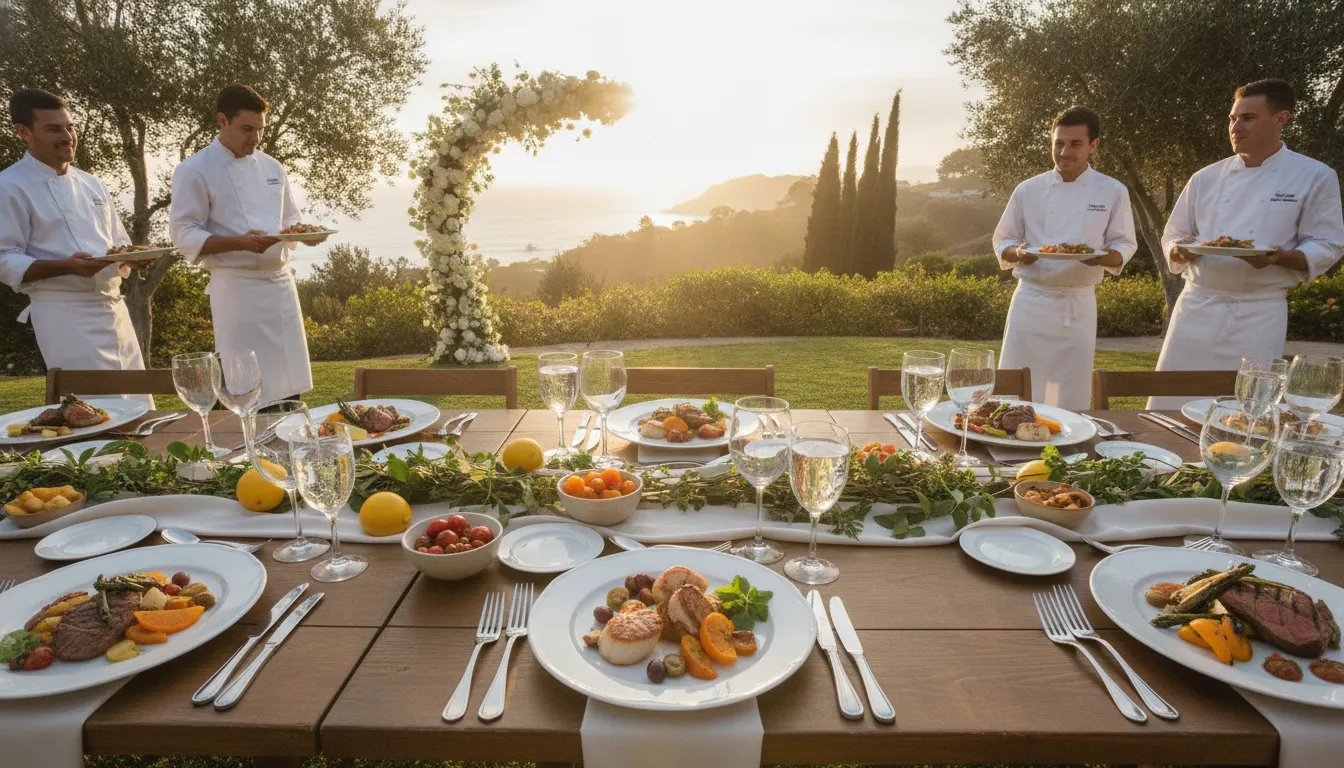
Gather can carry the same inclusive thinking through passed service, family-style dining, plated courses, grazing tables, or interactive stations. For example, a family-style table might pair seasonal seafood and herb-roasted vegetables with rice, legumes, citrus, and several sauces, allowing guests to compose a meal that suits them. A plated dinner can offer coordinated alternatives while preserving the visual rhythm and hospitality of the overall service.
Chef Oren selects ingredients at local San Diego markets according to quality and seasonality. Then works with each couple to shape the menu around the venue, guest demographics, cultural requirements, and event style. Explore seasonal San Diego wedding menus for more inspiration.
Final recipes, ingredients, preparation details, and service protocols are confirmed for each event. Couples should share allergies and dietary restrictions early, review the plan during consultation and tasting, and clarify how choices will be identified and served on the wedding day. That careful coordination helps the menu feel abundant, polished, and personal for everyone at the table.
How Should Couples Communicate Allergies and Dietary Needs?
Share dietary needs early, document them clearly, and confirm the plan at each milestone so your caterer, venue, and service team are working from the same information.
A thoughtful gluten-free wedding menu begins well before the tasting. Whether your celebration is at a La Jolla estate, a Coronado hotel, or a garden venue in Rancho Santa Fe. Clear communication gives the culinary team time to review ingredients, shape an appealing menu, and coordinate service details without making guests feel singled out.
- At the invitation and website stage, invite useful detail.
Add a simple RSVP prompt for allergies, celiac disease, gluten-free needs, vegetarian or vegan preferences, and cultural or religious requirements. Ask guests to describe the restriction rather than selecting a vague special meal checkbox. Couples should not diagnose or prescribe for guests, but they can make it easy for each person to communicate what the catering team needs to know.
At the RSVP deadline, build one guest needs matrix.
Consolidate responses into a private document showing the guest name or table, the stated need, and any clarification required. Separate medical allergies from lifestyle preferences, and flag whether the request concerns wheat, gluten, dairy, nuts, shellfish, or another ingredient. The FDA notes that gluten occurs naturally in wheat, rye, barley, and their crossbreeds, so ingredient language matters when planning a gluten-free menu.
Review the FDA's gluten-free labeling guidance
for context.
- During the consultation and tasting, discuss the actual dishes.
Share the matrix with your caterer and ask how sauces, marinades, garnishes, breads, desserts, and shared serving pieces will be handled. Gather by Oren uses a bespoke menu process, with Chef Oren consulting on restrictions, guest demographics, cultural requirements, venue logistics, and seasonality. A tasting is the right time to refine flavors and confirm which components need a separate preparation plan. Mayo Clinic notes that meats, seafood, fruits, vegetables, and some grains are naturally gluten-free, while final ingredients and preparation still need to be verified for the specific menu.
- Before the event, align with the venue and planner.
Confirm the kitchen layout, storage, refrigeration, equipment, plated or station-style service, and who will answer guest questions. CDC guidance identifies ingredient information, cross-contact prevention, staff training, and dedicated equipment or preparation areas as useful food-allergy practices. These measures support careful planning, but no caterer should promise a medical outcome or describe a meal as risk-free. Put the agreed service notes in the final event document.
At final counts, reconfirm changes.
Send the updated guest matrix with the final headcount and note late RSVPs, substitutions, or newly reported restrictions. For a wedding in Del Mar or North County Coastal, this is also a practical point to confirm timing, venue access, and the service format. Gather's full-service team can coordinate setup, service, temperature control, quality monitoring, cleanup, and venue restoration, helping the dietary plan carry through from kitchen to table. Explore
to see how that support fits into the broader event.
- On the wedding day, establish one clear point of contact.
Give the planner, catering captain, and venue representative the final dietary notes before guests arrive. Use discreet table or place-card cues only when appropriate, and make sure servers know how to direct questions rather than guessing. A calm handoff protects privacy, supports consistent communication, and lets every guest enjoy the same polished hospitality.
Early, specific communication does more than solve a menu puzzle. It gives the culinary team room to create seasonal California dishes that feel integral to the celebration, whether served plated, family-style, or through interactive stations.
Why Is Customization Essential for Inclusive Wedding Catering?
Customization turns dietary inclusion from a last-minute substitution into a considered part of the wedding experience, shaped around each guest, the venue, the season, and the couple's vision.
A preset menu can offer a few alternatives, but it rarely accounts for the full picture. One wedding may include gluten-free, vegetarian, vegan, halal, or kosher-style preferences alongside family traditions and cultural expectations. Another may call for a menu that suits a beachfront celebration in La Jolla, a garden reception in Rancho Santa Fe, or a formal evening in Coronado. Bespoke planning gives each decision a place in the larger guest experience.
- Guest needs:
plan dietary preferences, restrictions, and cultural requirements together.
- Venue realities:
shape preparation and service around the kitchen, access, timing, and format.
- Seasonal quality:
use California produce, herbs, and seafood when they are at their best.
Consideration. | Preset. | Bespoke. |
Dietary needs. | Limited substitutions. | Needs planned early. |
Cultural fit. | May miss family traditions. | Honors flavors and customs. |
Venue and format. | General service model. | Adapted to the venue. |
Seasonality. | Less locally responsive. | Uses seasonal ingredients. |
Execution. | More couple coordination. | Staff manage service details. |
Cultural requirements deserve the same attention as dietary preferences
Food carries memory and meaning, especially at weddings. A couple may want Mediterranean dishes that connect with one side of the family. Middle Eastern flavors that reflect heritage, or an Italian or Mexican menu that fits the celebration. Gather by Oren begins with a conversation about guest demographics, cultural requirements, and the feeling the couple wants at the table. Chef Oren is personally involved in shaping those choices, rather than treating inclusive dishes as separate or secondary.
The venue and service format change the right solution
A menu that works beautifully as a plated dinner may need a different approach for a family-style feast or interactive station. Venue access, kitchen facilities, travel between ceremony and reception, and the flow of service all affect how dishes are prepared and presented. Full-service execution matters because the plan must carry through setup, professional service, ongoing quality monitoring, and breakdown. That coordination helps inclusive choices feel integrated for every guest, not singled out.
Seasonality adds another layer of distinction. Chef Oren selects ingredients at local San Diego markets according to quality and availability. Allowing a menu to draw on California produce, seasonal seafood, herbs, and other ingredients at their best. Couples can explore custom seasonal menus and discuss how those choices can support their wedding style and dietary priorities.
Tell us your vision for a wedding menu designed around your guests.
Frequently Asked Questions
What are some good gluten-free foods to serve at a wedding?
Many naturally gluten-free foods make elegant wedding dishes, including seasonal vegetables, fruit, seafood, meats, legumes, rice, and other suitable grains. In San Diego, that might mean California citrus, local avocados, grilled seasonal seafood, vibrant salads, and thoughtfully composed Mediterranean dishes. Final ingredients, sauces, garnishes, and preparation protocols should be reviewed with your caterer for each guest need.
How early should we share dietary restrictions with our wedding caterer?
Share known allergies and dietary preferences during the first consultation, then update the caterer as RSVPs arrive. A guest matrix, menu tasting, ingredient review, and final venue meeting give the culinary and service teams opportunities to confirm details before the celebration. Early communication also helps integrate inclusive choices into the main menu rather than treating them as last-minute substitutions.
Can a wedding menu accommodate vegan, vegetarian, and gluten-free guests together?
Yes. A bespoke menu can include overlapping choices that are satisfying for everyone, such as vegetable-forward courses, legumes, rice, seasonal produce, and carefully selected sauces. Gather by Oren also adapts menus to cultural requirements, event style, venue, and season. So inclusive dishes can feel cohesive with a Mediterranean, Italian, Mexican, Middle Eastern, or other culinary direction.
How should couples discuss food allergies with a caterer?
Be specific about each allergy, sensitivity, or medical dietary requirement, and ask how the team verifies ingredients. Manages cross-contact, communicates with servers, and identifies the appropriate plate during service. A caterer should explain its actual protocols clearly without promising an allergen-free result. Confirm the plan during the tasting and again with the venue and service team before the wedding day.
Can inclusive wedding menus work for plated dinners and family-style service?
Yes. Plated dinners, family-style feasts, grazing tables, interactive stations, and passed appetizers can all be planned with thoughtful inclusive choices. The best format depends on the venue, guest count, service flow, and level of individual accommodation needed. Full-service staffing helps coordinate setup, service, temperature control, cleanup, and venue restoration while the couple enjoys the celebration.
Ready to Plan a More Inclusive San Diego Wedding Menu?
A thoughtful dietary plan can help every guest feel considered while preserving the seasonal, beautifully presented experience you want for your celebration. Share your wedding vision, guest needs, venue, and preferred service style with Gather by Oren so the team can shape a menu around your plans.
Contact Us to begin a personalized consultation.


Comments