
Outdoor Wedding Catering San Diego: Planning Guide
- Oren

- 2 days ago
- 15 min read
An outdoor wedding in San Diego can move from a breezy La Jolla ceremony to a warm inland reception. So the menu is only one part of a successful celebration. The site, season, guest comfort, access, service timing, and contingency plan all shape how the day feels.
Outdoor wedding catering san diego works best when a chef-led team plans the food, equipment. Staffing, venue coordination, and weather response together, then adapts the experience to your setting and season.
Gather by Oren brings that full-service perspective to beachfront ceremonies, vineyard receptions, and intimate garden celebrations across San Diego County. Explore our San Diego wedding catering services, then consider how local weather patterns can influence everything from shade and seating to setup and service timing.
Contact Gather by Oren to tell us your outdoor wedding vision and discuss a personalized catering approach.
Why Does San Diego Weather Change Outdoor Catering Plans?
For an outdoor wedding in San Diego, weather planning means designing for the specific setting, time of day, and guest experience rather than relying on a generic forecast.
A beachfront ceremony in La Jolla or Del Mar can feel entirely different from a garden reception in Rancho Santa Fe or a vineyard celebration farther inland. Coastal conditions may bring marine layer, fog, haze, humidity, or an afternoon breeze, while inland valleys can experience different heat and dryness. NOAA's San Diego climate reference considers temperature, precipitation, wind, humidity, fog, haze, and coastal eddy patterns, all of which can affect an open-air celebration. The National Weather Service climate overview provides useful context for that range of conditions.
Coastal and inland settings call for different comfort plans
At a coastal property, shade may not be the only consideration. A ceremony that begins in bright afternoon sun can become cooler or breezier near the water. Guests may appreciate a transition to sheltered dining, along with service timing that keeps food and beverages moving smoothly.
Inland venues around Rancho Santa Fe, Carmel Valley, or a vineyard may need deliberate shade and hydration planning during warmer hours. The National Weather Service has noted that drier conditions can bring elevated fire-weather concerns to portions of inland valleys, mountains, and deserts. This is not a prediction for a wedding date. It is a reason to confirm the venue's guidance and contingency expectations early. Check the San Diego NWS forecast and alerts as the event approaches.
Wind changes more than the table setting
Wind can influence ceremony microphones, place cards, menus, floral details, candles, service stations, and guest comfort. The NWS has reported that west-southwesterly winds can increase during the afternoon. Discuss timing and placement before event day. A caterer should understand where food will be prepared and held. The team should also know how to move between the prep area and guest tables if conditions change.
Ask where guests will find shade during the ceremony, cocktails, and meal service.
Confirm which areas offer shelter from coastal breeze or inland heat.
Discuss how wind could affect service stations, tabletop details, and ceremony timing.
Identify the alternate service area and the decision point for using it.
Confirm who communicates changes among the couple, venue, planner, rentals team, and caterer.
Make the contingency conversation practical
A contingency plan should make a garden, beach, or vineyard wedding more dependable. During consultation, share the venue address, guest count, schedule, access details, and areas you hope to use. Chef Oren reviews venue characteristics and logistics so the menu and service approach reflect the setting.
Gather by Oren supports beachfront ceremonies, vineyard receptions, and intimate garden soirees with a full-service approach that includes venue coordination, setup, service, and breakdown. The goal is not to make a weather promise. It is to decide in advance how guest comfort, food presentation, staff movement, and the overall rhythm of the celebration can be protected if the conditions shift.
What Should Your Outdoor Wedding Venue Plan Cover
An outdoor wedding venue plan should account for access, prep space, power, guest movement, shade, lighting, rentals, and property-specific requirements.
A beautiful setting in La Jolla, Del Mar, Rancho Santa Fe, or another San Diego location is only the beginning. The practical details determine whether dinner feels effortless or whether the team is solving avoidable problems during your ceremony. Start by asking how people, food, rentals, and service staff will move through the property from arrival through breakdown.
Start with access and preparation space
Confirm the arrival window, loading route, parking or staging area, and the distance between that point and the dining area. A garden, vineyard, or private estate may have narrow paths, steps, soft ground, or restrictions on vehicle access. Your caterer also needs to know where food can be received, plated, held, and replenished without disrupting guests or the ceremony.
Power deserves the same attention. Ask what outlets are available, where they are located, and whether the venue has restrictions on generators or extension routes. Clarify the space available for preparation, refrigeration, handwashing, waste handling, and secure storage. The right plan protects both the visual experience and the service sequence.
Map the guest experience, not just the meal
Walk the property as a guest would. Note the route from ceremony to cocktails, from cocktails to dinner, and from dinner to dancing or dessert. Shade, seating, lighting, and surfaces should support comfort throughout the event. Consider where guests will gather if the sun shifts, wind increases, or a brief weather change requires part of the celebration to move.
Lighting should cover walkways, service areas, entrances, and any transition between spaces. Rentals should be reviewed as part of the whole design, including tables, chairs, linens, service pieces, shade structures, and any items needed for the chosen layout. Gather supports outdoor and beach celebrations with adaptable setup resources, and equipment rental arrangements can be coordinated through vendor partnerships.
Confirm venue and authority requirements early
Requirements vary by property and location. Ask the venue which rules, approvals, operating limitations, insurance documents, sound considerations, waste procedures, or local-authority confirmations may apply to your specific event. Treat this as a planning conversation, not a legal checklist. The venue and applicable authorities are the appropriate sources for current requirements.
Chef Oren reviews venue characteristics and logistical requirements during the consultation, so bring site details before finalizing the menu or service format. Gather's full-service model includes food, venue coordination, plating, setup, service, and breakdown, allowing the culinary plan and physical site plan to develop together.
Arrival, loading, parking, and setup windows
Prep, holding, plating, refrigeration, handwashing, and waste areas
Power access, generator rules, and safe cable routes
Guest flow between ceremony, cocktails, dinner, dancing, and restrooms
Shade, seating, lighting, flooring, and weather contingency locations
Rental responsibilities, vendor access, and breakdown expectations
Venue instructions and applicable local-authority requirements to confirm
When these questions are answered early, your outdoor wedding plan can feel as considered as the setting itself. It also gives the catering team a clear foundation for timing, service, and a polished guest experience.
How Do You Build a Menu for an Open-Air Reception
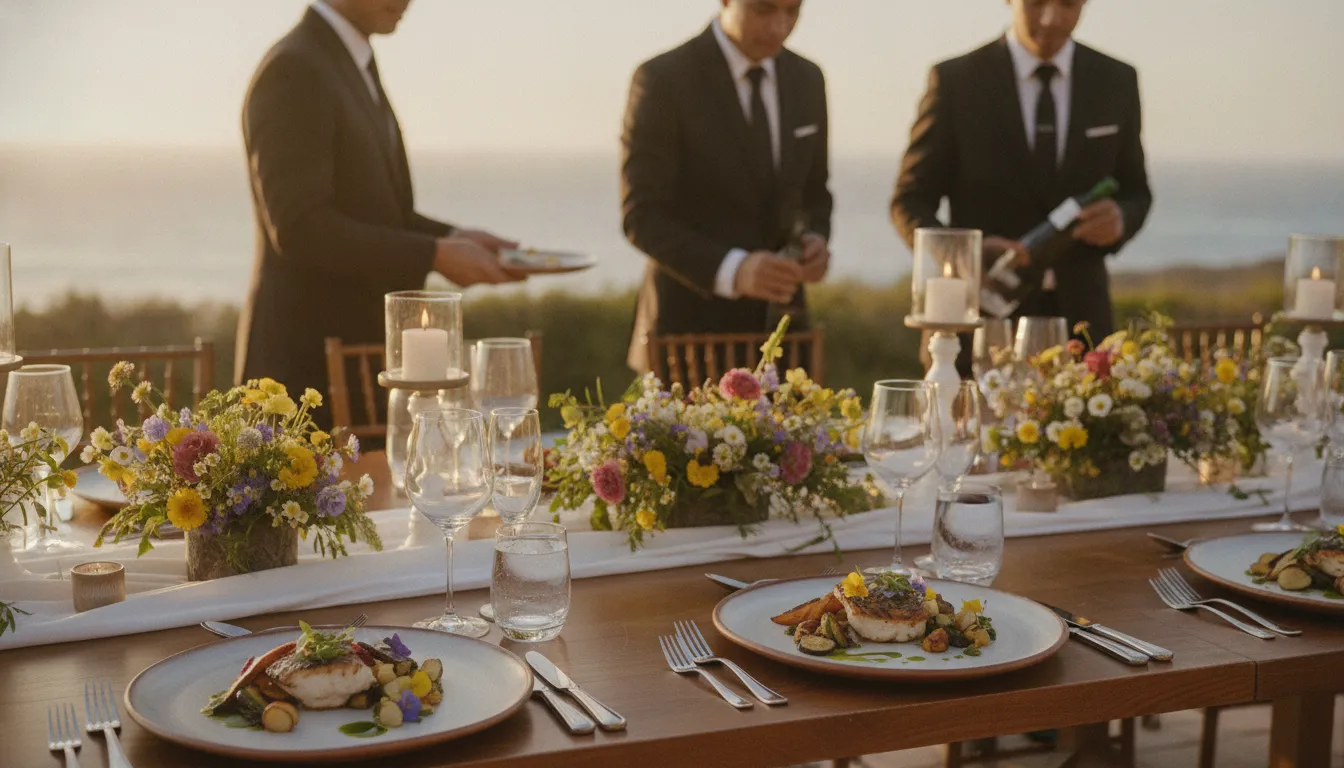
An open-air reception menu should follow the San Diego season, the setting, the service style, and the way guests will move through the celebration. The best menu feels effortless to guests because every course, station, and serving detail has been planned for the environment.
Start with the couple's vision, then let the venue and market guide the details. A beachfront celebration in La Jolla or Del Mar may call for a lighter coastal direction. While a vineyard or garden reception in Rancho Santa Fe can invite richer textures, abundant produce, and a more leisurely family-style meal. Gather by Oren customizes wedding menus around personality, tastes, venue, season, and style rather than forcing an outdoor event into a standard format. Chef Oren also reviews the venue's characteristics and logistical requirements as part of the collaborative menu design process.
San Diego seasonality gives the menu a natural sense of place. Chef Oren personally visits local markets and selects produce for quality and seasonality. Depending on the time of year, that may mean California citrus, ripe local avocados, colorful vegetables, seasonal fruit, and coastal-inspired flavors. Local sourcing can also bring sustainable seafood, artisanal breads, and local cheeses into the menu, creating a generous spread that feels connected to Southern California without becoming predictable.
Match the service style to guest flow
Outdoor menus work best when service style supports the shape of the reception. A plated dinner creates a composed, seated experience, but it requires clear table access and carefully timed service. Family-style dining encourages conversation and shared abundance, while a cocktail reception, grazing table, or interactive station can help guests mingle across a garden, estate, or coastal property. The right choice depends on the ceremony-to-reception transition, seating plan, dance floor, and how far guests must travel for food.
When stations or passed selections are part of the plan, place them where they will not interrupt speeches, bar service, or the main guest path. Build a menu with contrasting bites, colors, temperatures, and textures so guests have a reason to explore without creating a bottleneck. For a more detailed look at seasonal custom wedding menus, couples can review how menu direction can be tailored to the occasion.
Plan for dietary needs and outdoor conditions
Dietary requirements should shape the menu from the beginning, not appear as an afterthought. Gather can accommodate vegan, vegetarian, halal, and kosher-style requirements. Discuss these needs during menu development so the culinary team can create thoughtful alternatives with the same level of presentation and flavor as the rest of the meal. Cultural preferences can also guide the menu's ingredients, service rhythm, and balance.
Choose dishes that remain appealing as guests move between sun, shade, and seating areas.
Use covered or protected presentations for foods sensitive to direct sun, wind, or changing temperatures.
Coordinate serving vessels, replenishment timing, and placement with the venue layout.
Confirm dietary labeling and separate preparation needs before the event day.
Holding and temperature considerations are equally important. Outdoor service requires a menu that can be transported, held, plated, passed, or replenished while maintaining quality. Gather's event-day protocols include temperature control during transport and service, continuous quality monitoring, and early verification of equipment and supplies. That operational discipline protects the guest experience while allowing the menu to remain refined.
For couples drawn to bright herbs, warm grains, seasonal vegetables, and shared plates, these Mediterranean wedding menu ideas can offer a useful starting point. The final menu should still be shaped around the specific reception, guest needs, venue, and season.
Which Equipment and Staffing Details Matter Most
Reliable outdoor wedding execution starts with a team that arrives early, verifies setup details. Protects food quality, and adapts service to the venue, weather, guest count, and reception format.
Beautiful food is only one part of a successful open-air reception. At a beach property in La Jolla, a garden in Del Mar, or an estate in Rancho Santa Fe. The plan must account for how food, people, tables, service pieces, and timing move through the site. Gather by Oren supports outdoor and beach events with adaptable equipment and setup resources. Rental arrangements can also be coordinated through vendor partnerships when a venue requires additional items.
Start with a venue-adapted setup
The right setup begins with the property rather than a standard checklist. During consultation, Chef Oren reviews the venue's characteristics and logistical requirements. Establish where the team can load in, where food can be prepared or finished. How far the kitchen or staging area is from guests, and which surfaces are suitable for service. A coastal reception may require a different arrangement from a vineyard dinner, even when both have the same guest count.
Before event day, confirm the full inventory and responsibilities for tables, serving pieces, linens, cooking or holding resources, lighting, shade, and any rental items. The goal is not to place every object in the same way. It is to create a polished flow that protects the guest experience and respects the venue's layout.
Scale the team to the service format
Staffing should reflect the number of guests and the way they will be served. Gather scales professional service teams to the event and trains them across plated, family-style, buffet, station, and passed-appetizer formats. Those formats create different demands. A plated dinner requires coordinated table service and course timing. Stations need replenishment and guest flow management. Passed appetizers require careful movement through the reception, especially when ceremony and cocktail areas are separated.
For a 50- to 150-guest celebration, a practical operational example might look like this: the team arrives before guests. Checks the site and supplies, stages service areas, coordinates with the venue, and confirms the sequence with the couple's planner. During the reception, staff monitor presentation and replenishment while keeping food at appropriate temperatures. After the final service, they clear the site, complete breakdown, and restore the venue. The exact staffing plan should be built around the menu, layout, service style, and access conditions rather than an invented ratio.
Ask how the event will be protected from delays
Early arrival is valuable because outdoor sites often involve longer distances, changing conditions, and more moving parts than an indoor dining room. Event-day protocols should include equipment and supply verification before service begins. Temperature control during transport and service is equally important, particularly when food travels from a staging area to a lawn, terrace, or beachfront setting. Continuous quality monitoring helps the team respond to timing, presentation, and replenishment needs as the celebration unfolds.
When will the catering team arrive, and how much time is reserved for setup?
Who verifies that serving pieces, tables, linens, holding resources, and rental items are present?
How will the layout change if the ceremony, cocktail hour, and dinner take place in separate areas?
How will food temperature and presentation be monitored during transport and service?
Who coordinates timing with the venue, planner, rentals, and other event professionals?
What does breakdown include, and how will the property be cleaned and restored afterward?
These questions bring the operational plan into the open before the wedding day. They also help couples distinguish between a menu handoff and full-service support. Gather's documented model includes food, venue coordination, plating, setup, service, and breakdown, so the catering plan can account for the complete experience from arrival through restoration.
Which San Diego Outdoor Wedding Settings Fit Your Vision
The right outdoor setting shapes the menu, service flow, guest experience, and planning conversation, from a breezy La Jolla ceremony to a garden dinner in Rancho Santa Fe.
San Diego County offers a remarkable range of backdrops for an outdoor wedding. A coastal celebration in Del Mar, Point Loma, or Solana Beach may call for a light, polished service plan that keeps guests comfortable. A garden in Carmel Valley or Rancho Santa Fe can create an intimate rhythm, while a vineyard or private estate invites longer dinners and layered courses.
Gather by Oren serves beachfront ceremonies, vineyard receptions, and intimate garden soirees, with service throughout San Diego County and Southern California capability by arrangement. Chef Oren reviews the property's characteristics and logistical requirements before shaping the culinary plan. That distinction matters: the venue remains your chosen location, while Gather coordinates its catering approach around the space and your vision.
Match the setting to the experience
A coastal location can complement California produce, sustainable seafood, and a graceful cocktail-forward reception. Gardens often suit an intimate progression from passed appetizers to a plated or family-style dinner. Vineyards and estates may offer the visual atmosphere for a more structured meal, with each course paced to the celebration. These are creative directions, not fixed rules. The couple's tastes, season, dietary needs, and the property's practical details should lead the final menu.
For couples considering Rancho Santa Fe, the Rancho Santa Fe wedding catering guide offers a more focused look at local planning context and venue fit. You can also explore Gather's San Diego wedding catering services to see how chef-led planning and full-service execution support different celebrations.
Consider whether guests will move between ceremony, cocktails, dinner, and dancing.
Confirm where the team can prepare, stage, serve, and complete breakdown without disrupting the setting.
Share the expected guest count early. Gather documents capacity from intimate dinners of about 20 guests through celebrations of more than 200, with a 50 to 150 guest sweet spot.
Ask the venue and relevant local authority about property-specific requirements rather than assuming one setting follows the rules of another.
Whether your vision is a sunset gathering in La Jolla, a vineyard reception near Carmel Valley. Or an estate celebration in North County, the setting should inform the service plan without limiting your personality. A thoughtful outdoor wedding catering plan makes the landscape feel intentional and keeps guests comfortable.
How Does Outdoor Wedding Catering in San Diego Fit Into Your Planning?
Begin planning outdoor wedding catering as soon as your date and setting are taking shape. Then confirm the operational details in stages rather than leaving every decision until the final weeks.
Outdoor celebrations in La Jolla, Del Mar, Rancho Santa Fe, Carmel Valley, and other San Diego locations vary by access, layout, guest flow, and exposure to the elements. A thoughtful sequence lets the catering team shape food and service around the property.
- Start with the venue facts.
Once you are considering a beachfront ceremony, vineyard reception, garden celebration, or private estate, collect the details a caterer will need to evaluate the site. Share the address, event areas, guest arrival route, available prep space, power information, service windows, rental responsibilities, and any venue or local-authority requirements already provided to you. Requirements can vary by property, so confirm those items with the venue and the relevant authority rather than assuming one outdoor plan applies everywhere. Chef Oren reviews venue characteristics and logistical requirements during consultation, helping identify what the service plan must account for.
- Establish a realistic guest count and service direction.
An early estimate does not need to be final, but it should be specific enough to guide staffing, equipment, rentals, and table flow. Gather's documented capacity ranges from intimate dinners of about 20 guests to celebrations of more than 200, with 50 to 150 guests as a common sweet spot. At this stage, decide whether the atmosphere calls for plated service, family-style dining, a cocktail reception, grazing tables, or interactive stations. The choice affects how guests move through an open-air space and how much service infrastructure the venue needs.
Develop the menu around the season and setting.
Bring your priorities to the first culinary conversation: favorite flavors, cultural traditions, dietary requirements, desired level of formality, and the visual character of the site. Gather creates menus around the couple's personality, venue, season, and style. San Diego's agricultural availability can guide the direction, from California fruits and coastal-inspired flavors in summer to market-driven produce selected for quality and seasonality. Identify vegan, vegetarian, halal, or kosher-style needs early so the menu feels cohesive for every guest, rather than treating those meals as an afterthought. For broader decisions about the overall catering process, refer to this
broader San Diego wedding catering planning guide
.
- Schedule the consultation, tasting, and contingency conversation.
Use the consultation to walk through timing, presentation, equipment coordination, staffing, and the guest experience from arrival through last course. Discuss how adaptable setup resources and vendor partnerships may support the selected property. Review a weather contingency that addresses wind, precipitation, heat, fog, or other conditions relevant to the location. San Diego's coastal and inland patterns are not identical, and the National Weather Service identifies wind and changing weather conditions as planning considerations. The goal is not to predict the day months in advance, but to agree on decision points and responsibilities.
- Make a final confirmation pass.
As the guest list, floor plan, rentals, and schedule settle, send the updated headcount and venue instructions to the catering team. Confirm menu selections, dietary notes, service format, arrival and access timing, equipment, staffing, and the weather plan in one shared record. A full-service team should also align setup, food transport and temperature control, service monitoring, breakdown, and venue restoration. This final review protects the details that make an outdoor wedding feel effortless to guests.
Before the final confirmation, keep a short checklist visible to everyone involved:
Venue access, prep space, power, layout, and site requirements
Current guest count, dietary needs, service style, and menu direction
Weather decision points, rentals, staffing, setup, service, and breakdown responsibilities
Planning outdoor wedding catering in San Diego is less about choosing an arbitrary lead time and more about giving each decision room to inform the next. Start with the site, build toward the menu, and close with a documented event-day plan.
Tell Gather by Oren your outdoor wedding vision and request a personalized consultation before you finalize the venue and menu.
Frequently Asked Questions
What should an outdoor wedding venue provide for the caterer?
Confirm the venue's access route, prep area, power availability, guest flow, lighting, rentals, and cleanup expectations before finalizing the menu. Requirements vary by property and local authority, so ask the venue which approvals or permits apply to your specific site. Gather can review those logistical details during the consultation and coordinate equipment rentals through vendor partnerships when needed.
How does San Diego weather affect an outdoor wedding menu?
Plan for the specific setting and season, not just the forecast. Coastal locations such as La Jolla and Del Mar may experience afternoon wind, marine-layer conditions, or changing temperatures, while inland venues can have different heat and fire-weather considerations. A thoughtful menu pairs well with the conditions, and the service plan should include shade, timing, temperature control, and a practical weather contingency.
Can an outdoor wedding menu accommodate dietary or cultural needs?
Yes. Menus can be tailored to the couple's tastes, venue, season, dietary needs, and cultural requirements. Gather accommodates vegan, vegetarian, halal, and kosher-style needs, with seasonal San Diego ingredients such as California produce, sustainable seafood, local cheeses, and artisanal breads. Share restrictions early so the menu and service style feel cohesive for every guest.
How many catering staff members are needed for an outdoor wedding?
Staffing depends on the guest count, service format, venue layout, and event flow. A plated dinner, family-style meal, passed appetizers, and interactive stations each require different coordination. Gather scales its professional team to the event and manages early arrival, equipment and supply checks, setup, service, temperature monitoring, replenishment, and complete cleanup.
Can a caterer serve a wedding at a beach, garden, or vineyard?
Outdoor catering can work across San Diego County settings, including beachfront ceremonies, intimate garden celebrations, vineyards, and estates. The key is matching the equipment, menu, staffing, and access plan to the property. Gather reviews the venue's characteristics and logistical requirements so the culinary experience remains polished from setup through breakdown.
Ready to Plan Your Outdoor Wedding Catering in San Diego?
Outdoor celebrations feel effortless when the menu, service, equipment, and venue details are shaped around your setting and your vision. Tell Gather by Oren what you are planning, from a coastal ceremony in La Jolla to a garden reception in Rancho Santa Fe. And the team can discuss a personalized approach for your celebration. Contact us through the contact page to request your consultation.


Comments